

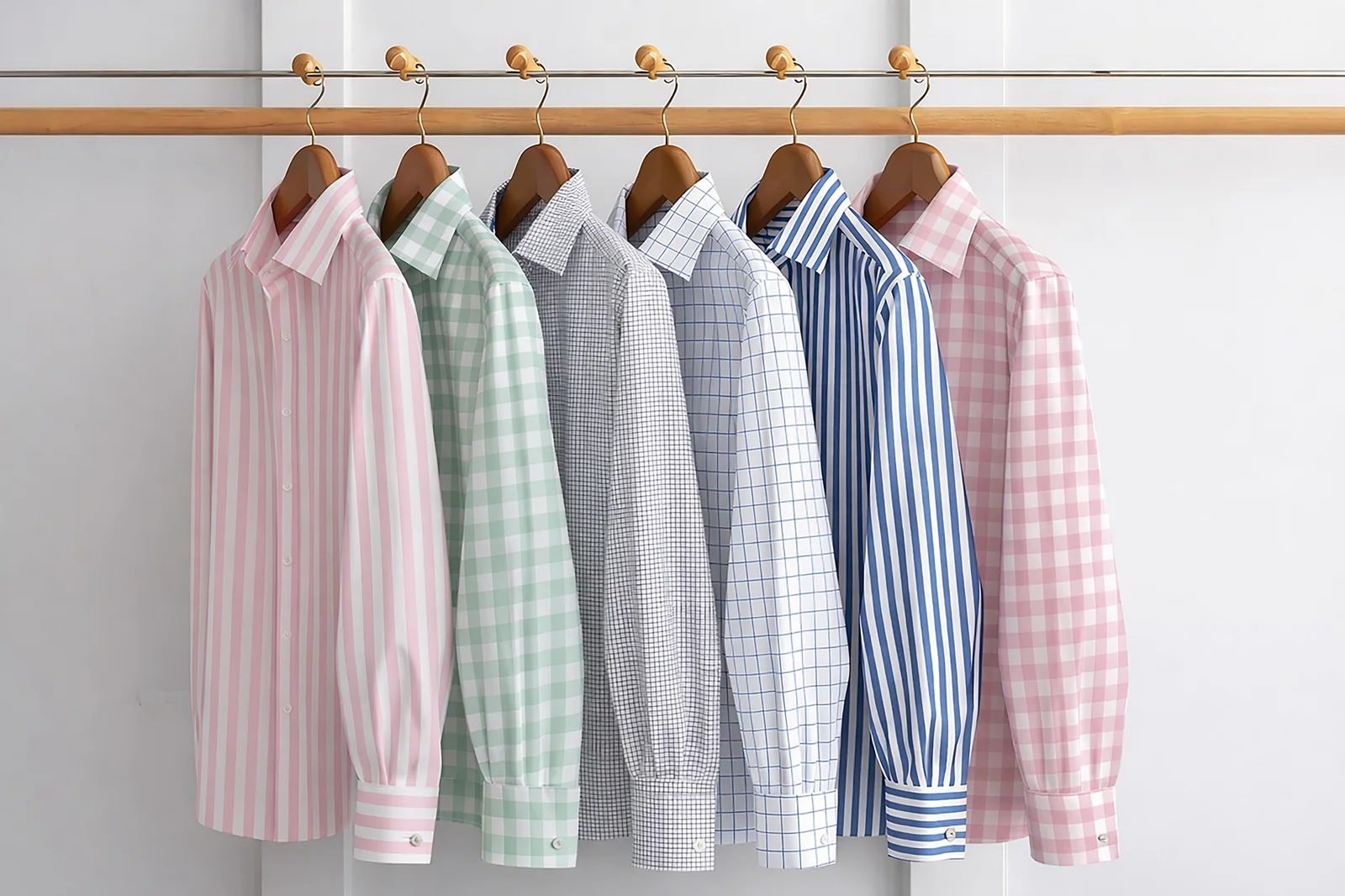
Stripes have followed clothing for centuries, moving across cultures, classes and uses. They appear simple, yet they carry meaning shaped by history, craft and context. A stripe can guide the eye, frame the body or signal identity. In fabric design, lines create rhythm. They also shape how a garment feels, wears and endures.
Striped fabric holds a quiet authority. It works across tailoring, workwear, uniforms and leisure clothing. Each arrangement of lines brings its own logic. Some stripes impose order. Others suggest ease. This language of lines remains consistent even as fashion changes.
This article looks closely at how different stripe types function in fabric design. Each section focuses on construction, history and visual effect. The aim is clarity rather than spectacle. Stripes reward attention.
The Structure and Purpose of Stripes
A stripe forms when contrast repeats at regular intervals. The contrast may come from colour, weave, yarn count or texture. In woven cloth, stripes usually run along the warp or weft. In knits, they emerge through yarn changes within the loop structure.
Designers use stripes to control balance. Narrow lines compress space. Wider bands slow the eye. Regular spacing brings calm. Irregular spacing introduces tension. These choices affect how a garment reads from a distance and how it feels up close.
Throughout history, stripes carried social meaning. In medieval Europe, striped clothing marked outsiders such as servants and entertainers. By the nineteenth century, the same pattern moved into respectable menswear and naval uniforms. Industrial weaving allowed precision, which gave stripes a sense of order and discipline.
Horizontal Stripes
Horizontal stripes run parallel to the ground. They stretch across the body and emphasise width. This effect depends on spacing, colour contrast and fabric weight. Thin bands with low contrast appear subtle. Bold bands draw attention.
In knitwear, horizontal stripes often appear in jerseys and sweaters. The structure of the knit softens the line. This gives comfort and ease. In woven cloth, the same stripes feel sharper and more graphic.
Sailors wore these stripes for practical reasons. The pattern made a person easier to spot against the sea. Over time, the look became tied to leisure and coastal life. Designers adopted it for casual clothing, beachwear and sportswear.
Horizontal stripes suit garments that value movement and ease. T shirts, polos and lightweight jumpers use them well. The line repeats across the torso and creates a steady visual beat. This pattern works best when fabric quality supports clean edges and consistent colour.
Vertical Stripes
Vertical stripes rise from hem to shoulder. They lengthen the figure and guide the eye upward. This makes them a mainstay of tailoring. Trousers, suits and shirts rely on this structure to create shape.
In woven striped fabric, these lines align with the warp. This gives strength and clarity. High yarn tension keeps the stripe crisp. Wool, cotton poplin and worsted blends handle this form well.
Vertical stripes also signal authority. Bankers, lawyers and civil servants adopted them during the rise of the modern suit. The pattern suggested discipline and reliability. Even today, the association remains strong.
Designers control impact through width and spacing. Close lines feel formal. Wider spacing relaxes the look. Colour choice matters as well. Dark ground colours with light lines feel traditional. Reversed palettes feel modern.
Pinstripes
Pinstripes represent restraint. They consist of very thin vertical lines set against a solid ground. The spacing often measures several centimetres, which gives breathing room to the cloth.
This stripe emerged with industrial weaving. Fine yarn control allowed consistent, narrow lines. Tailors embraced the pattern for business suits. The look carried professionalism without excess.
Pinstripes work best in wool suiting. The smooth surface keeps the line sharp. In cotton shirting, the effect becomes lighter and less formal. The stripe still reads as ordered but feels more relaxed.
The appeal lies in detail. From a distance, the fabric reads as solid. Up close, the lines reveal themselves. This quiet complexity suits formal wear and uniforms. Pinstripes reward close inspection and careful construction.
The Breton Stripe
The Breton stripe has a clear origin. It entered French naval uniforms in the nineteenth century. The pattern followed strict rules, with dark blue bands on a white ground. Each band held symbolic meaning tied to naval victories.
This stripe moved from uniform to civilian wear through artists and writers. Painters wore it for its clarity and ease. The look became linked to creative life and coastal freedom.
In jersey knit, the Breton stripe feels soft and flexible. The knit structure allows the line to move with the body. This makes it ideal for tops and dresses. The pattern keeps balance even when worn loose.
Designers respect its proportions. Altering the bandwidth or colour shifts the meaning. Traditional versions feel grounded. Modern versions play with scale while keeping the essential rhythm intact.
Stripes in Woven and Knit Fabrics
The method of construction shapes how stripes behave. In woven cloth, the line stays fixed. The yarns cross at right angles and hold tension. This gives clarity and durability.
In knit striped fabric, loops create stretch. The stripe bends with movement. This suits casual garments and active wear. Colour transitions appear softer because yarns blend at the loop edges.
Fabric weight also matters. Heavy cloth supports bold stripes. Light cloth suits fine lines. Designers balance stripe scale with fabric purpose to avoid distortion during wear.
Dyeing methods influence colour depth. Yarn dyed stripes offer consistency. Piece dyed stripes risk uneven edges. High quality cloth relies on careful dye control to maintain line integrity.
Cultural Meaning and Modern Use
Stripes continue to signal identity. Sports teams use them for recognition. Schools use them in uniforms. Designers use them to reference history or place.
Modern fashion often mixes stripe types within one garment. Panels combine directions to create contrast. This approach requires precision to avoid visual noise. Clean construction keeps the design readable.
Sustainability also shapes current practice. Designers reuse classic stripe layouts to reduce waste and trend churn. Timeless patterns support longer garment life.
The stripe endures because it adapts. It carries memory while remaining practical. This balance keeps it relevant.
Why Stripes Endure
A stripe provides structure without rigidity. It allows for variation within an order. This quality is appropriate for clothing that must serve both the body and the eyes.
Striped fabric remains popular because it communicates visually. The line communicates through space, direction and contrast. Each choice has meaning, which the wearer absorbs, often without thinking.
Stripes continue to mark time and place on workwear, art studios, ships and city streets. They remain one of the most versatile tools for fabric design.
The language of stripes remains clear. It communicates through line, craftsmanship and application.
FAQ
How do stripes affect fabric performance over time?
Stripes can influence how a garment wears and ages. In high-quality striped fabric, consistent yarn tension keeps the lines aligned even after repeated washings. Poor construction can cause stripes to twist or fade unevenly, which becomes more noticeable than on solid fabrics. This is why striped garments often reveal fabric quality more clearly over time.
Are striped fabrics harder to manufacture than solid fabrics?
Yes, striped fabric requires greater precision. Yarn-dyed stripes need careful planning before weaving or knitting begins, as colour placement cannot be corrected later. Any misalignment is immediately visible. This makes striped fabric more demanding in terms of quality control, especially for vertical stripes and pinstripes, where accuracy is critical.
How do stripes influence garment cutting and tailoring?
Stripes affect how patterns are cut and assembled. Matching stripes at seams, pockets, and collars takes extra skill and time. In tailoring, even slight mismatches can disrupt the visual flow. Well-made striped garments show continuity across seams, which is often a sign of careful craftsmanship rather than mass production.
Do stripe choices impact sustainability in fabric design?
Stripes can contribute to sustainable design when applied correctly. Timeless patterns, such as pinstripes and Breton stripes, lessen dependency on ever-changing trends. Because these designs last longer, they are worn more and replaced less frequently. This increases product life and reduces overall fabric waste.
Can stripes be used effectively in modern, minimalist design?
Absolutely. Stripes offer structure without excess detail, which suits minimalist aesthetics well. Designers often use subtle contrast, fine stripe widths, or limited colour palettes to keep the look clean and contemporary. In this context, stripes act as a quiet design element rather than a decorative statement.