

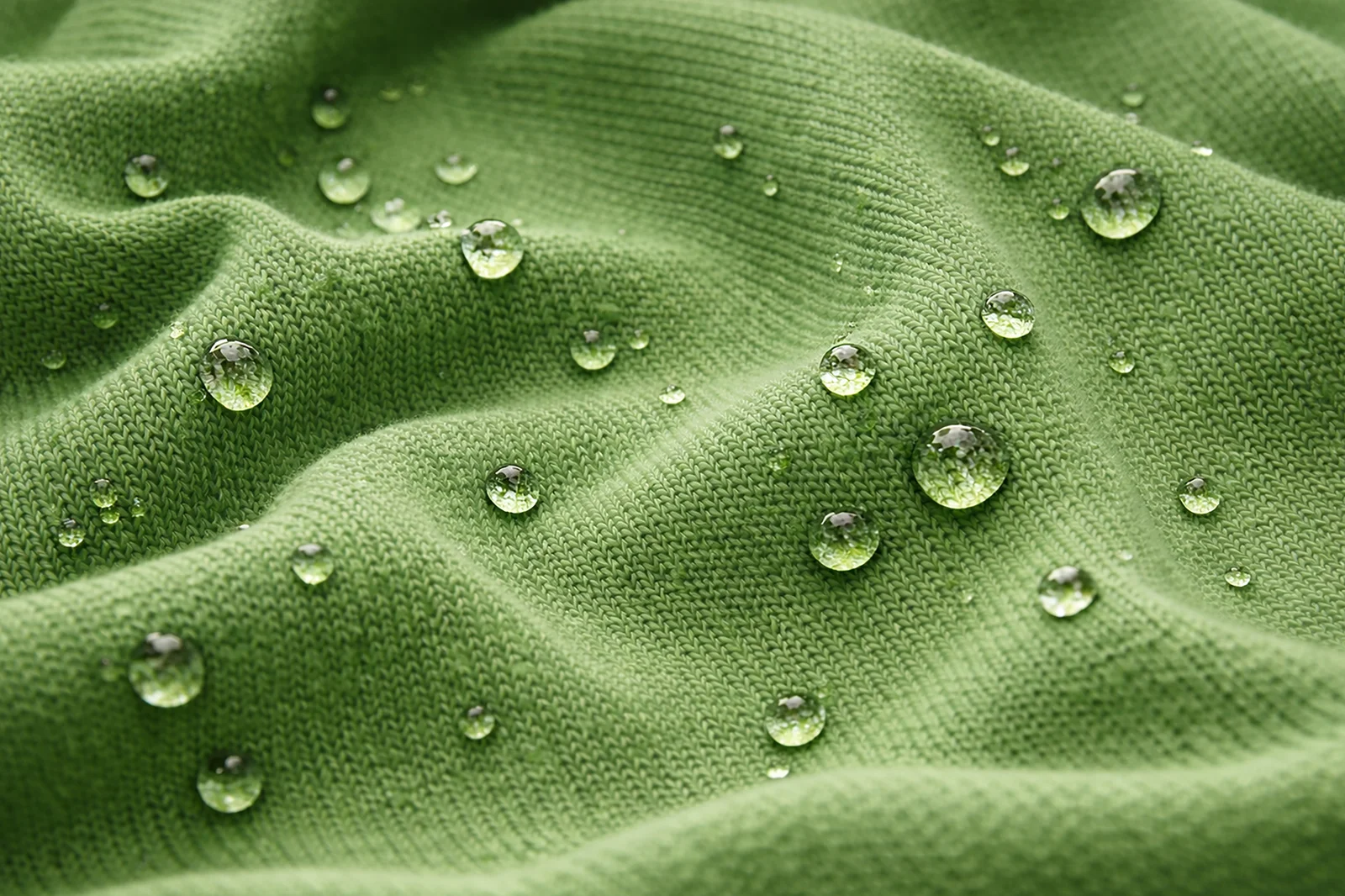
Sweat management is one of the most studied performance areas in modern textile engineering. Comfort in sportswear, workwear and technical apparel depends less on thickness or softness and more on how effectively a fabric handles moisture.
Many materials are labelled as moisture wicking. Yet not all moisture wicking fabric performs in the same way. The difference lies in fibre chemistry, fabric construction and finishing technology. Together, these elements determine how moisture moves, spreads and evaporates.
Understanding moisture management in textiles requires looking beyond surface claims and examining how fabrics are engineered at a structural level.
Understanding Moisture Movement at the Fibre Level
At its core, moisture wicking is about controlled liquid transport.
When the body perspires, sweat forms on the skin surface. For comfort, this moisture must move away from the skin and disperse across a larger area where it can evaporate. This movement is influenced by the chemical nature of the fibre.
Fibres can be broadly categorised as hydrophilic or hydrophobic.
Hydrophilic fibres such as cotton absorb moisture into their structure. They hold water within the fibre itself. This can create a damp sensation because evaporation slows once the fibre becomes saturated.
Hydrophobic fibres such as polyester resist absorbing water. Instead of retaining moisture internally, they encourage liquid to travel along the surface of the fibre. This surface movement supports faster spreading and evaporation, which is central to moisture wicking performance.
Surface energy and capillary action play a significant role here. Capillary action allows liquid to move through narrow spaces without an external force. In moisture management in textiles, this principle enables sweat to travel through yarn channels and across fabric surfaces.
The fibre’s inherent chemistry sets the foundation for performance.
Fibre Cross Section and Engineered Performance
Modern moisture wicking fabric rarely relies on raw material alone. Fibre geometry is carefully engineered to enhance liquid transport.
Traditional fibres often have a round cross section. Engineered performance fibres may feature trilobal, hollow or multi channel cross sections. These shapes increase surface area and create microscopic pathways that promote capillary action.
Multi channel polyester fibres, for example, contain grooves that draw moisture outward from the skin side of the fabric to the outer surface. The increased surface area accelerates evaporation.
Microfibres further enhance this effect. Their extremely fine diameter increases the number of capillary spaces within the yarn. This allows moisture to disperse more evenly and dry more quickly.
In this way, fibre engineering becomes a critical driver of moisture management in textiles.
Fabric Construction: Knit, Weave and Airflow Dynamics
Even with similar fibres, fabric structure can drastically affect performance.
Knitted fabrics are often utilised in moisture wicking applications because of their looped structure, which produces natural porosity. This increases ventilation and allows moisture vapour to leave more efficiently.
Structures like mesh and pique improve airflow and surface exposure. These structures facilitate quick evaporation by increasing the region over which moisture can spread.
Woven fabrics, by contrast, tend to have tighter interlacements. They can still achieve effective moisture management in textiles, but the design must balance density with breathability.
Yarn thickness, fabric weight and stitch density all influence how quickly moisture travels and how readily it evaporates. A heavier fabric may absorb more liquid, yet it may also require longer drying time.
Construction therefore acts as a performance multiplier or limiter depending on how it is engineered.
The Role of Textile Finishes in Moisture Management
In many cases, moisture wicking properties are enhanced through finishing treatments applied after fabric formation.
Hydrophilic finishes can be added to synthetic fibres to improve their ability to spread moisture across the surface. These finishes reduce surface tension, encouraging liquid to move rather than bead.
Some treatments are durable and bonded at a molecular level. Others may gradually diminish after repeated laundering. Durability is an important consideration in assessing long term moisture management in textiles.
Chemical finishes can also be combined with mechanical treatments that modify surface texture. Together, these processes optimise liquid transport and evaporation behaviour.
However, finishes should complement the fibre and construction. They cannot fully compensate for poor structural design.
Why Don’t All Moisture Wicking Fabrics Perform the Same
The term moisture wicking is often used, yet performance varies greatly.
Some fabrics predominantly absorb moisture. Others transfer it efficiently, but if airflow is restricted, it may not evaporate as quickly. True performance is determined by the balance of absorption, spreading and drying rate.
Environmental factors also influence the outcomes. Humidity, temperature and air movement all influence evaporation speed. A fabric that works well in dry weather may react differently in a humid environment.
Standardised testing aids in distinguishing performance levels. Vertical wicking tests determine how far liquid moves in a given period. Drop tests assess absorption speed. The drying time assessment determines how quickly a saturated fabric returns to a comfortable state.
These quantitative characteristics enable a more objective assessment of moisture wicking fabric performance.
Designing for End Use and Performance Demands
Moisture management in textiles must align with end use.
High intensity sportswear demands rapid transport and evaporation under heavy perspiration. Workwear may prioritise durability alongside consistent moisture control. Outdoor garments must balance sweat management with thermal insulation.
Climate also plays a role. In warmer regions, lightweight and highly breathable constructions enhance comfort. In cooler environments, moisture transport must occur without excessive heat loss.
Effective design considers fibre selection, structural engineering and finishing strategy as an integrated system.
Conclusion
Moisture wicking is not a single property applied to a fabric. It is the outcome of coordinated engineering at multiple levels.
Fibre chemistry governs how moisture interacts with the material. Cross sectional design enhances capillary movement. Fabric construction controls airflow and dispersion. Finishes refine and optimise surface behaviour.
Together, these elements define the true performance of moisture wicking fabric and shape the broader field of moisture management in textiles.
Understanding these variables allows manufacturers, designers and technical buyers to move beyond generic claims and evaluate fabrics based on measurable performance principles.
FAQ
Is moisture wicking fabric the same as quick dry fabric?
They're connected but not the same thing. Moisture wicking fabric draws sweat away from your skin while you wear it.Quick dry fabric refers to how quickly a material dries after getting wet. A fabric may dry fast but remain unpleasant if it does not handle sweat efficiently during activity. Good moisture wicking promotes comfort throughout the day, not just after exposure to water.
Does moisture wicking stop you from sweating?
No, it does not prevent perspiration. Sweating is the body's natural means of cooling itself. Moisture wicking simply helps to manage sweat more effectively. It spreads moisture across the cloth, allowing it to evaporate rather than resting against your skin. Moisture management in textiles aims to promote comfort rather than interfere with the body's natural functions.
Does moisture wicking performance fade over time?
It can, depending on how the fabric was made. If the moisture wicking performance is built into the fibre structure, it usually lasts for the lifetime of the garment. If it depends mainly on a surface treatment, performance may gradually reduce after many washes. Using mild detergents and avoiding excessive heat can help maintain moisture management in textiles for longer.
Is moisture wicking fabric good for humid weather?
It can help, but humidity changes how it feels. Moisture wicking fabric moves sweat away from your skin, but evaporation is slower when the air is already full of moisture. In humid conditions, breathability becomes especially important. Lightweight, well ventilated fabrics tend to feel more comfortable in such climates because they allow better air circulation along with moisture control.