

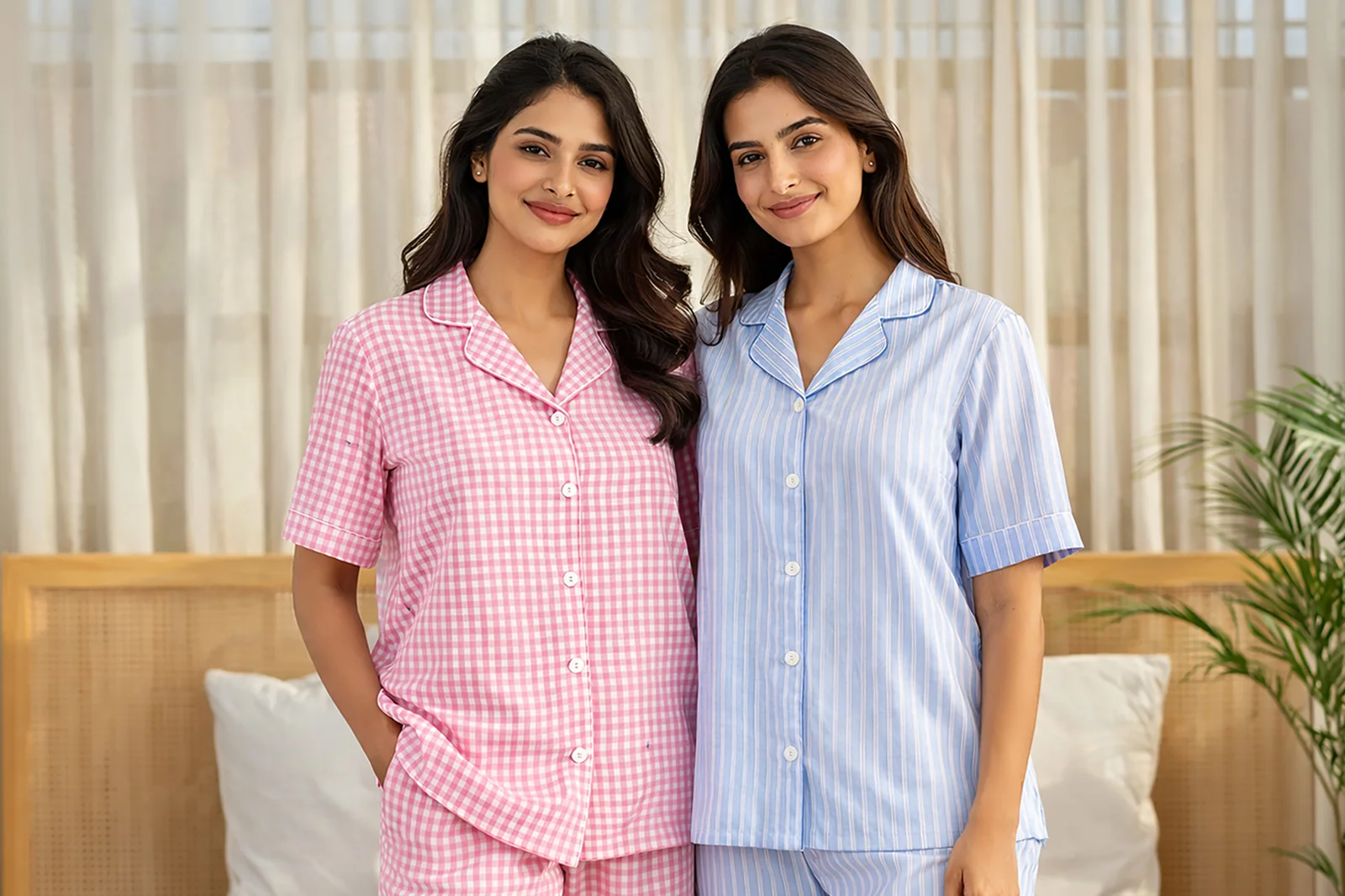
There was a time when loungewear in India had a very clear role. It was what you changed into at the end of the day. Soft cotton sets. Printed night suits. Comfortable, functional, private.
It belonged inside the home.
Fashion lived elsewhere.
So when did that change?
When did loungewear move from being something you slept in to something you styled?
The shift did not happen overnight. It happened gradually, then suddenly.
For years, comfort and fashion were treated as separate conversations. One was practical. The other was expressive. But somewhere along the way, Indian consumers began expecting both at the same time. They wanted clothes that felt easy but looked intentional. They wanted silhouettes that relaxed without losing shape. They wanted softness that held structure.
The category began to evolve.
The Moment Comfort Became Visible
A major turning point came during the work-from-home years. The boundary between inside and outside started to blur. Meetings happened on screens. Social interaction shifted to digital spaces. Clothing was still being seen, even if it was being worn at home.
Coordinated lounge sets started replacing old nightwear patterns. Neutrals became more refined. Cuts became cleaner. Waistbands sat better. Sleeves were designed with proportion in mind.
Brands began to realise something important. Loungewear was no longer a side category. It was a primary wardrobe decision.
And when that shift happened, fabric stopped being a background detail.
It became central.
From Soft to Structured
Early nightwear could rely on basic cotton constructions. The expectation was simple. It had to feel soft and breathable. Durability mattered, but silhouette did not carry brand identity.
Modern loungewear changed that equation.
Today, a lounge set must:
- Fall well on the body
- Maintain shape after multiple washes
- Resist pilling
- Offer stretch without losing recovery
- Hold colour consistency across batches
- Feel premium against the skin
These are not surface qualities. They are technical outcomes.
A slight change in GSM can alter drape. A minor fibre blend adjustment can affect stretch memory. Dyeing precision influences repeatability when brands scale.
What used to be a sourcing task became a structural decision.
The Rise of Fabric Awareness Among Emerging Brands
Emerging sleepwear and loungewear founders today understand fibre composition. They explore cotton blends, viscose constructions, stretch knits and printed developments with intention. The conversation has matured.
But the real challenge appears when brands begin scaling.
Sampling is one phase. Production is another.
Colour lots must align. Shrinkage needs control. Stretch recovery must remain stable across batches. Print clarity must hold after washing. Small inconsistencies that go unnoticed in 100 pieces become visible in 10,000.
From where we stand within the manufacturing ecosystem, this shift has been visible in real time.
At Cirocco Fabrics, much of our work with emerging loungewear and sleepwear brands begins with these exact conversations. Not just about softness or pattern direction, but about how a fabric will behave over months of production. How it will scale. How will it maintain consistency? How will it support the brand’s positioning long term? Because creating loungewear and building a loungewear brand are two different journeys.
Loungewear as a Lifestyle Category
Today in India, loungewear is worn to run errands. It appears in travel wardrobes. It shows up in social media content. It is styled, photographed and positioned.
The category carries identity.
And identity is built on material choices as much as design direction.
The consumer may not always articulate why one set feels better than another. But they recognise the difference. They notice how it drapes. How it ages. How it fits after five washes. How it holds its colour.
Behind that experience is fabric engineering.
As the category matured, so did the expectations placed on suppliers. It is no longer enough to deliver softness. Brands look for repeatability, technical clarity and partnership-level communication. They want someone who understands how fabric behaves beyond the first sample.
Because loungewear today competes in a fashion space, not just a comfort space.
So, When Did it Become Fashionable?
Perhaps the better question is this:
When did comfort begin demanding craftsmanship?
The answer lies in the evolution of consumer behaviour, digital visibility and brand ambition in India. Once comfort stepped into the spotlight, it had to perform. It had to look considered. It had to last.
And that is when fabric became strategic.
For emerging brands building in this space, the shift offers both opportunity and responsibility. The opportunity lies in a category that continues to grow. The responsibility lies in choosing materials and manufacturing partners who understand that loungewear is no longer secondary.
It is visible. It is expressive. It is technical.
Loungewear became fashion when fabric stopped being an afterthought and started becoming the foundation.
And in many ways, that transformation is still unfolding.
FAQ
What is the best fabric for loungewear in India?
The most suitable fabric for loungewear is determined by the brand's positioning and client expectations. Cotton remains popular for breathability, while viscose and modal blends provide a smoother drape and softer texture. Many current loungewear designers employ stretch knits with elastane to improve form retention and comfort. The trick is to select a fabric that retains its structure, resists pilling and works well after several washing.
How do I choose the right fabric supplier for my sleepwear brand?
When choosing a fabric supplier for a sleepwear or loungewear brand, consistency is more important than just softness. Look for a manufacturer who can maintain stable GSM, colour consistency across dye lots, and reliable stretch recovery in bulk production. Clear communication, repeatability and technical understanding of fabric behaviour are essential for scaling smoothly.
Why is fabric quality important for building a successful loungewear brand?
Fabric quality has a direct impact on how a garment feels, fits and lasts. Customers notice when fabrics shrink, pill, or lose shape after washing. Good fabric construction helps to preserve drape, colour and comfort over time. Strong fabric quality fosters trust and decreases returns in growing loungewear brands, promoting long-term brand success.