

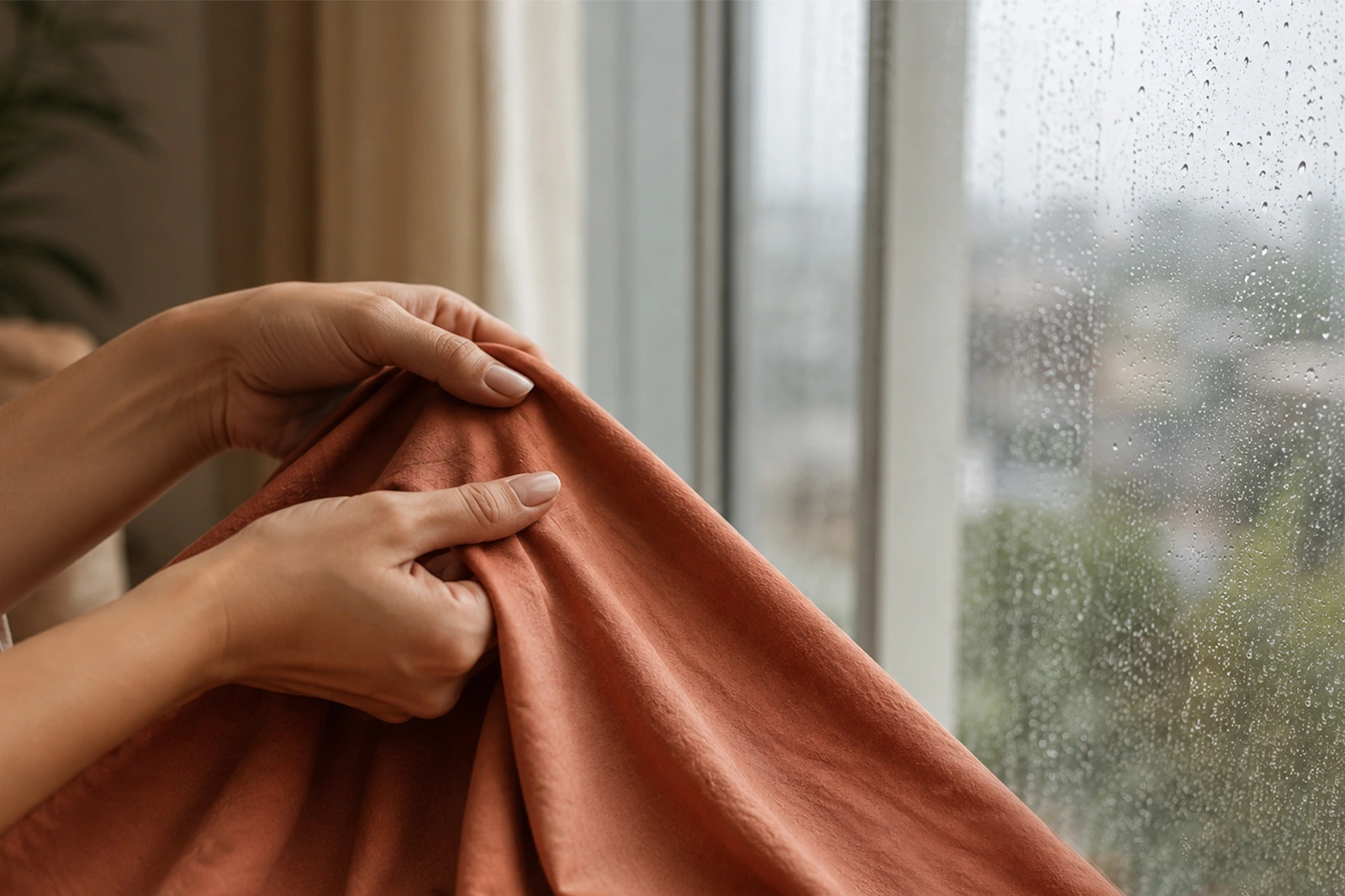
Monsoon laundry should honestly qualify as a test of patience. Freshly washed clothes take forever to dry. Towels develop a personality of their own. Jeans feel permanently damp. Somewhere in the wardrobe, one forgotten T-shirt quietly starts smelling like an abandoned attic.
Monsoon changes the way fabrics behave. Moisture hangs in the air for hours, wardrobes lose ventilation and everyday clothing absorbs humidity faster than most people realise. Over time, that damp environment can affect texture, colour, freshness and the overall life of your clothes.
The good news is that fabric care in humid weather does not need to feel complicated. A few thoughtful habits can help clothes stay fresher, cleaner and far more comfortable through the rainy season.
Here is a practical fabric care guide to help protect your wardrobe during monsoon.
Why Clothes Struggle During Monsoon
Monsoon has a way of changing the entire rhythm of laundry. Clothes that usually dry by afternoon stay damp till night. Freshly washed towels lose that clean smell surprisingly fast. Denim feels heavy for hours. Even wardrobes begin to carry that faint smell of moisture after a few rainy days in a row.
A lot of this comes down to humidity.
In moisture-heavy weather, fabrics absorb dampness from the air constantly. Even when clothes feel dry on the surface, moisture can remain trapped deep within the fibres. That lingering dampness slowly affects the way clothes look, feel and smell.
Common fabric problems during the rainy season include:
- Damp odours that refuse to leave
- Mildew and fungal spots
- Fabric stiffness after drying indoors
- Colour bleeding during washing
- Yellowing in lighter garments
- Clothes feeling cold or clammy while wearing them
Indoor drying adds another layer to the problem. Most homes receive less sunlight and limited airflow through long stretches of rain. Laundry ends up drying slowly in enclosed spaces, which allows moisture to stay trapped for much longer.
Different fabrics also react differently in humid conditions:
- Cotton absorbs moisture quickly and can start smelling stale if left damp for too long.
- Denim becomes heavy and takes much longer to dry properly.
- Silk prefers dry conditions and struggles with prolonged humidity.
- Synthetic fabrics dry faster, though they often feel sticky on humid days.
Once you understand how fabrics behave in wet weather, caring for clothes becomes far less frustrating. Small changes in washing, drying and storage can make a noticeable difference through the season.
Common Monsoon Clothing Problems
- The Damp Smell That Refuses to Leave
Every rainy-season wardrobe has that one shelf.
The faint smell usually comes from moisture trapped inside fabric fibres. If clothes are folded before drying completely, the smell settles in quickly and lingers for days.
A simple habit helps here. Allow clothes a little extra air-drying time before folding them away. Even an additional hour near a fan or open window can make a noticeable difference.
- Fungus and Mildew in Wardrobes
Dark corners and poor ventilation create ideal conditions for mildew.
This often appears as tiny black or grey spots on clothes, bags, or stored fabrics. Once mildew settles into fabric, removing it becomes difficult.
Keep wardrobes slightly ventilated through damp weeks whenever possible. Moisture absorbers, silica gel sachets, or even small bowls of baking soda can help reduce excess humidity inside cupboards.
- ColourBleeding During Washing
Rainy weather already makes laundry feel endless. Colour bleeding simply adds drama to the situation.
Dark clothes tend to release excess dye when soaked for long periods. Washing coloured garments separately helps prevent accidental stains on lighter fabrics.
Cold water washing also helps preserve fabric colour and texture.
Fabric-Wise Monsoon Care Tips
Cotton
Cotton fabric feels breathable and comfortable in humid weather, though it absorbs moisture very quickly.
Try to:
- Avoid leaving damp cotton clothes in laundry baskets
- Dry cotton garments in well-ventilated spaces
- Iron lightly before storage to remove residual moisture
Cotton shirts and bedsheets especially benefit from proper airflow through wetter months.
Denim
Denim fabric through rainy weather feels like carrying emotional baggage. The thick fabric absorbs moisture deeply and dries slowly. Heavy denim left damp for long periods can develop odour and stiffness quite easily. Turn jeans inside out while drying to improve airflow. Avoid over-washing denim during rainy weeks unless necessary.
Linen
Linen fabric handles humidity fairly well because of its breathable weave. It dries faster than heavier natural fabrics and stays comfortable in sticky weather.
Store linen pieces properly after drying because wrinkles tend to settle more deeply in damp conditions.
Silk
Silk and humid weather have a slightly complicated relationship. Excess moisture can weaken delicate fibres and affect texture over time. Silk garments should always dry naturally in shaded areas with good ventilation. Avoid direct heat drying or prolonged exposure to damp wardrobes.
Synthetic Fabrics
Polyester and similar synthetic fabrics dry quickly, which makes them practical during rainy days.
However, they can hold onto sweat and body odour in humid conditions. Gentle washing and proper drying become important here, especially for activewear.
Smart Drying Habits During Monsoon
Drying clothes through weeks of rain sometimes feels like a full-time strategy game.
A few small adjustments can help clothes dry faster and smell fresher.
Use Airflow Generously
Fans, open windows and cross ventilation help moisture escape from fabric much faster.
Clothes packed tightly together on drying racks stay damp longer because airflow cannot move properly between layers.
Avoid Overcrowding Laundry Stands
Every household attempts this during the rainy season. One drying rack somehow becomes responsible for an entire week of laundry. Spacing clothes apart slightly helps air circulate more efficiently and reduces that lingering damp smell.
Catch Small Moments of Sunlight
Monsoon sunlight behaves unpredictably. The moment it appears, use it. Even short periods of natural sunlight help freshen fabrics and reduce moisture trapped inside heavier garments.
Wardrobe Storage Tips for Humid Weather
Fabric care continues long after laundry is done. Storage habits matter just as much.
Here are a few simple wardrobe tips for rainy weather:
- Avoid stuffing wardrobes too tightly
- Keep shelves dry and clean
- Use moisture absorbers inside cupboards
- Rotate clothes occasionally for better airflow
- Store rarely used garments in breathable fabric bags
- Keep damp shoes away from clothing shelves
Neem leaves and cedar blocks are also traditional favourites for keeping wardrobes fresh in humid conditions.
Everyday Monsoon Clothing Hacks
Sometimes the smallest habits make the biggest difference.
Carry an Extra T-Shirt
Unexpected rain has excellent timing. Keeping an extra lightweight T-shirt or shirt in your bag helps during long commutes and prevents sitting in damp clothing for hours.
Let Shoes Dry Properly
Closed shoes absorb moisture surprisingly quickly in wet weather. Remove insoles whenever possible and allow shoes to air out overnight. Newspaper stuffing can help absorb excess moisture inside footwear.
Do Smaller Laundry Loads
Large laundry piles struggle to dry properly through long spells of rain.
Smaller loads dry faster, smell fresher and reduce the risk of moisture staying trapped inside thicker fabrics.
Final Thoughts
Monsoon has its own rhythm. The rain arrives suddenly, laundry schedules become unpredictable and wardrobes require a little more attention than usual.
Fabric care through humid months is really about consistency. Small habits create a cleaner, fresher wardrobe over time. Clothes last longer, feel more comfortable and carry far less of that unmistakable rainy-season smell.
A little airflow, thoughtful storage and patience with drying can quietly change the entire season for your wardrobe.
FAQ
Why do clothes smell damp even after they are washed properly?
In humid weather, clothes often take much longer to dry completely. Even a little trapped moisture inside the fabric can create that musty smell over time. This usually happens with thick fabrics like towels, denim, and bedsheets. Giving clothes extra drying time near a fan or open window helps quite a bit.
Which fabrics work best during the rainy season?
Lightweight and breathable fabrics usually feel more comfortable in humid conditions. Linen and certain synthetic blends dry faster and stay lighter through the day. Cotton feels airy as well, though it absorbs moisture quickly and needs proper drying to stay fresh.
How can I stop fungus or mildew from forming inside wardrobes?
Airflow makes a big difference. Try not to overcrowd shelves, and avoid storing clothes that feel even slightly damp. Moisture absorbers, silica gel sachets, or neem leaves can help keep wardrobes fresher through rainy weeks. Opening cupboard doors occasionally also helps reduce trapped humidity.
Is it okay to dry clothes indoors during continuous rain?
Yes, though indoor drying needs good ventilation. Clothes dry much better when air can move around them freely. Using a fan, keeping windows slightly open, and spacing garments apart on drying racks can help prevent damp smells and stiffness in fabrics.