

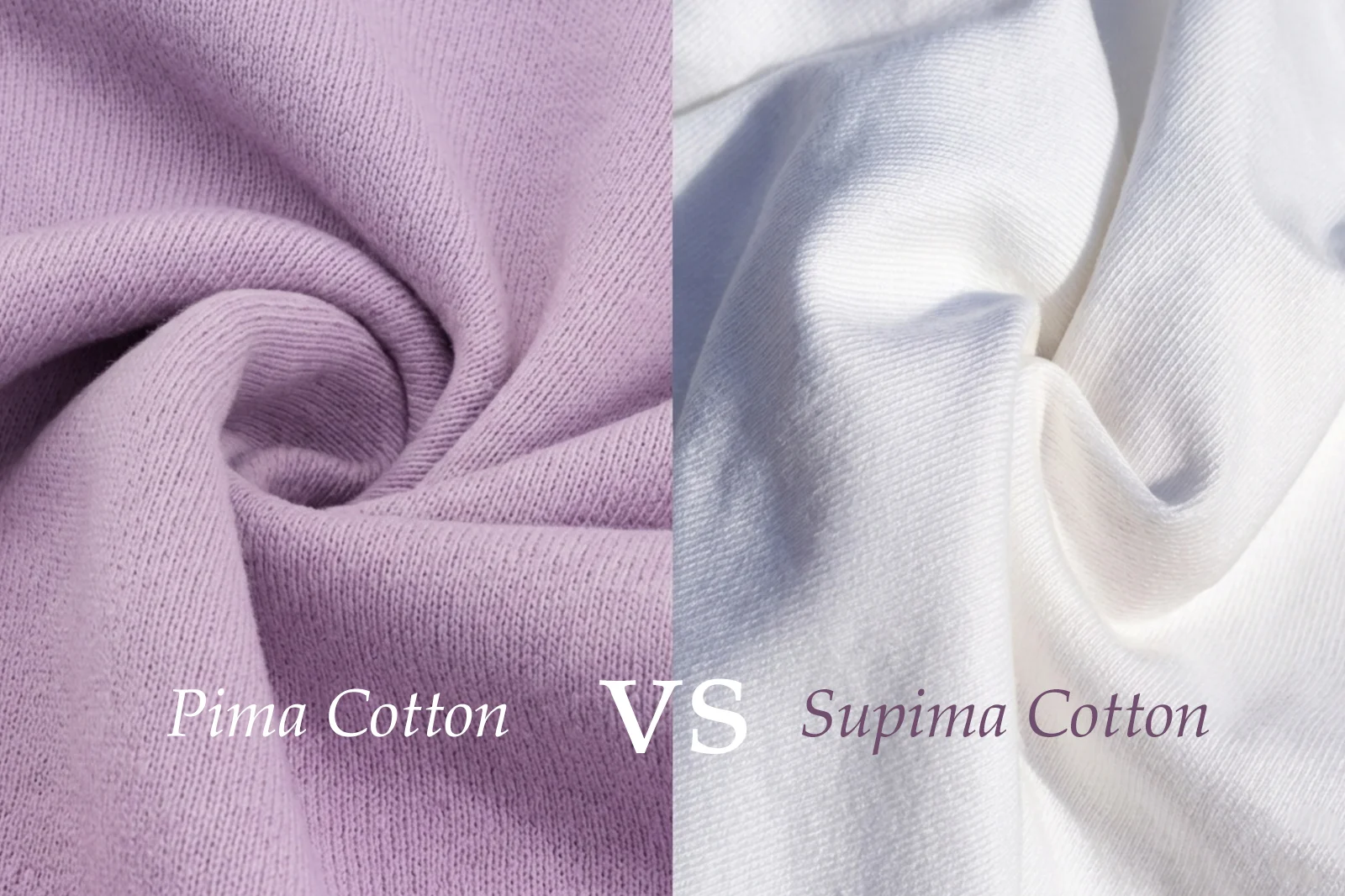
When Pima and Supima cotton are stated together, it’s simple to assume they’re the same. They are closely similar, but not the same. The distinction rests in something more than merely softness. It boils down to origin, certification and consistency.
Both are classified as Extra Long Staple, which means they are constructed with longer fibres than standard cotton. This single aspect affects everything, from texture to durability. The actual difference between Pima and Supima cotton is how controlled and traceable the quality is.
Understanding the difference allows you to make smarter decisions, whether you are a business, a designer or simply looking for better fabric.
What Is Pima Cotton
Pima cotton comes from the plant species Gossypium barbadense, known for producing longer and finer fibres than regular cotton.
These longer fibres create smoother yarn, which results in softer and stronger fabric. However, “Pima” is a generic term. It refers to a type of cotton, not a certified standard.
That means the quality of Pima cotton can vary depending on where and how it is grown.
Key Characteristics of Pima Cotton
- Fibre length: Typically 1.3 to 1.4 inches
- Soft and breathable
- Stronger than regular cotton
- Good resistance to pilling
- Absorbs dye evenly
Because it is not regulated, Pima cotton can sometimes be blended with lower-quality fibres. This is where things start to differ from Supima.
What Is Supima Cotton
Supima cotton is essentially a premium, certified version of Pima cotton. The name comes from “Superior Pima,” and it isa trademarked cotton grown only in the United States.
Unlike Pima, Supima is tightly controlled. Every batch is verified for origin and purity. This ensures consistency in quality, which is a major reason it is priced higher.
Key Characteristics of Supima Cotton
- Fibre length: 1.5 inches or more
- Grown only in the United States
- Fully traceable and certified
- Consistent quality across batches
- Stronger and smoother than standard Pima
Supima removes the uncertainty that comes with generic labelling. You know exactly what you are getting.
10 Key Differences Between Pima and Supima Cotton
Here is where the distinction becomes clear:
1. Branding
Pima is a generic name. Supima is trademarked and certified.
2. Origin
Pima is grown in multiple countries. Supima is grown only in the United States.
3. Purity
Pima may be blended. Supima is guaranteed to be 100% pure.
4. Fibre Length
Pima fibres are long. Supima fibres are even longer and more uniform.
5. Softness
Pima is soft. Supima feels smoother and more refined.
6. Strength
Pima is durable. Supima can be significantly stronger, which improves fabric life.
7. Consistency
Pima quality can vary. Supima maintains consistent quality across production.
8. Traceability
Pima is harder to verify. Supima is fully traceable from farm to fabric.
9. Price
Pima is premium but more accessible. Supima sits at a higher price point.
10. Rarity
Both are rare, but Supima is even more limited due to controlled production.
Why Fibre Length Matters More Than You Think
The biggest reason both fabrics feel premium comes down to fibre length.
Longer fibres mean:
- Fewer loose ends in the yarn
- Smoother fabric surface
- Less pilling over time
- Better strength and durability
Supima simply takes this a step further with even longer and more uniform fibres, which is why it performs better in the long run.
Sustainability: Pima vs Supima Cotton
Both Pima and Supima cotton support sustainability in one important way — they last longer.
Long-lasting fabric reduces the need for frequent replacement. This directly cuts down textile waste, which is a major issue in fast fashion.
However, there is a nuance:
- Pima cotton varies in farming practices depending on the region
- Supima cotton is more regulated, which can improve accountability
That said, neither is inherently organic. Sustainability depends more on how the cotton is grown than just the fibre type.
Performance in Real Conditions
Hot Weather
Both fabrics are breathable, but Supima performs slightly better because a finer yarn allows lighter fabric construction.
Humid Conditions
Pima absorbs moisture well. Supima improves moisture distribution, making it feel less sticky over time.
Daily Wear
Pima works well for everyday comfort. Supima holds its structure and finish better after repeated washing.
Which One Should You Choose
This is where most people overcomplicate things. The answer is actually simple.
Choose Supima Cotton if:
- You want guaranteed quality
- You care about traceability
- You are buying premium or luxury products
Choose Pima Cotton if:
- You want high quality at a better price
- You trust the brand or supplier
- You are looking for everyday premium comfort
Both are excellent choices. Supima just removes the guesswork.
How to Identify Genuine Cotton
Since premium cotton is often blended, it helps to know what to look for:
- Check Certification
Supima always comes with official labelling. If it is missing, it is not Supima.
- Feel the Fabric
Real extra-long staple cotton feels smooth, not overly glossy or synthetic.
- Test Durability
Good fabric holds shape and does not feel weak when stretched slightly.
Final Thoughts
The difference between Pima and Supima cotton is not about choosing good vs bad. It is about choosing between flexibility and certainty.
Pima gives you access to premium cotton with some variability. Supima gives you controlled, verified quality at a higher price.
Once you understand that, the decision becomes much clearer.
For fabrics that balance quality, consistency and trusted sourcing, explore collections from Cirocco Fabrics, one of India’s leading fabric manufacturers and suppliers.
FAQ
Does Supima cotton shrink after washing?
A little, yes. Like most natural fabrics, it can tighten up if you wash it in hot water or toss it in a high-heat dryer. If you stick to cold washes and mild drying, it usually holds its shape pretty well.
Is Pima cotton good for sensitive skin?
Most people find it very comfortable. This fabric is smooth to the skin that it doesn’t give you the scratchy or rough feeling that you might experience with conventional cotton. That's why it's so often used in basics and pyjamas.
How long do Pima and Supima cotton fabrics last?
They're in good form for a long time. But as long as you take good care of them, you will find they stay soft and do not wear out so rapidly. Think of them as items you can have in your wardrobe for years.
How can you tell if cotton is high quality while shopping online?
Begin with the product description. Good brands will tend to tell you about the type of cotton, where it’s from and how it’s created. If it sounds vague or incomplete, that’s usually a sign to dig a little deeper before you buy.