

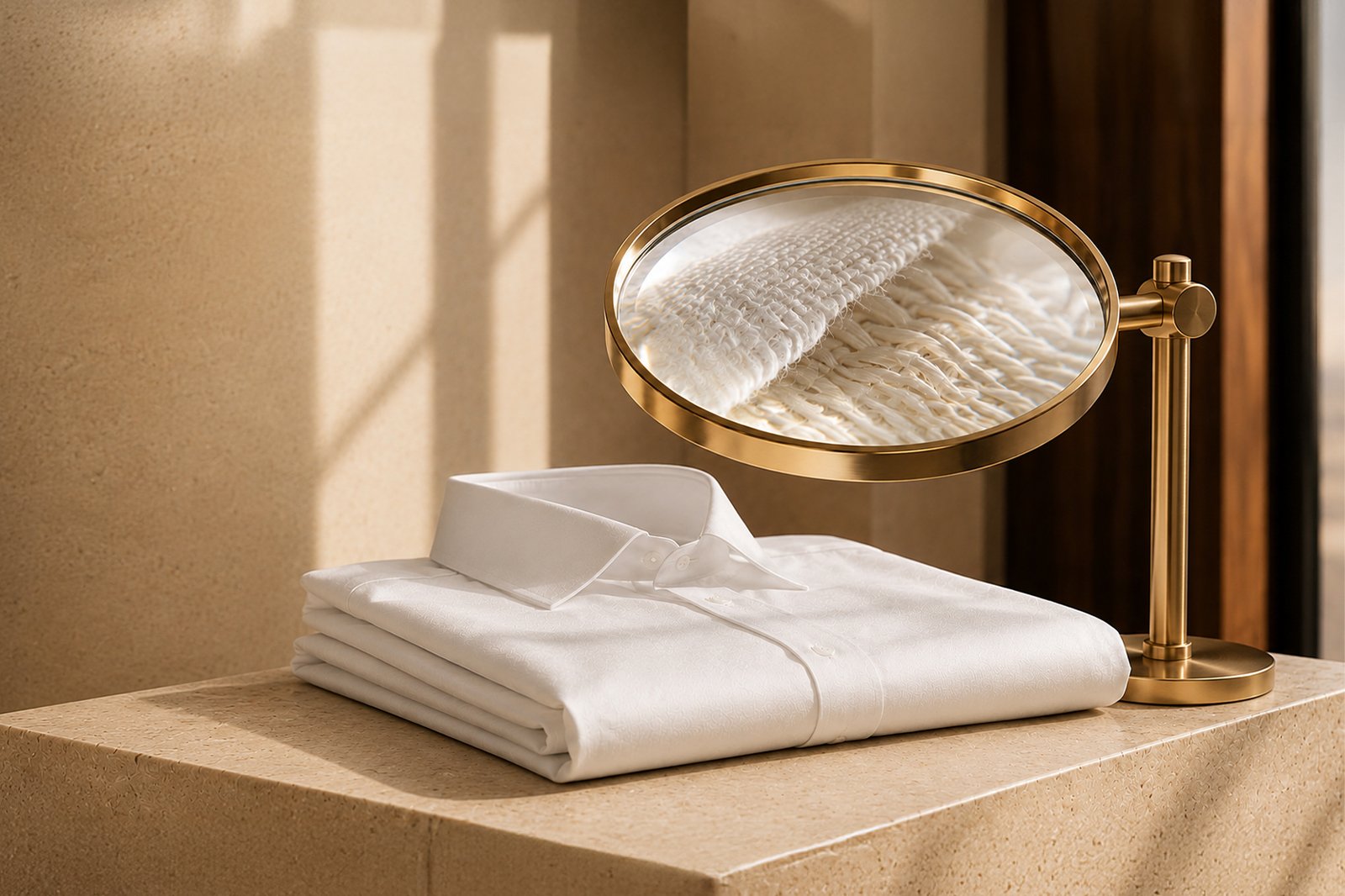
When people talk about shirt fabric, one term almost always comes up first: thread count.
For years, thread count has been treated as the ultimate measure of quality. It appears on product labels, marketing material and buying guides, often suggesting that a higher number automatically means a better fabric. While thread count is an important specification, it is only one part of a much larger picture.
The truth is that a premium shirting fabric is defined by the quality of its fibres, the way the yarn is produced, the weave, the finishing process and the consistency of manufacturing. These elements work together to determine how a fabric feels, performs and lasts over time.
Understanding these factors helps buyers make informed decisions instead of relying on a single number.
What Does Thread Count Actually Mean?
Simply put, thread count refers to the total number of threads woven into one square inch of fabric. It includes both the vertical threads, known as the warp, and the horizontal threads, known as the weft.
A higher thread count generally indicates a denser weave. Density can contribute to a smoother surface and a refined appearance, but it does not reveal everything about the fabric itself.
Thread count does not tell you where the cotton came from, how fine the yarn is, whether the weave is suitable for shirting or how the fabric has been finished. It measures construction density, not overall quality.
Looking beyond this number gives a much clearer understanding of what makes a fabric suitable for premium shirts.
Why Thread Count Is Only Part Of The Story
Thread count gained popularity because it is easy to understand. A single number creates the impression that fabric quality can be measured quickly, but textiles are far more complex than that.
Two fabrics can have the same thread count and still offer completely different levels of comfort, durability and appearance. The difference lies in the quality of the materials and the expertise behind their production.
This is why experienced manufacturers and apparel brands assess several characteristics before selecting a quality shirt fabric. They look at how every stage of the manufacturing process contributes to the final product rather than focusing on one specification alone.
Fibre Quality Lays The Foundation
Every premium fabric begins with high-quality fibres.
Long-staple and extra-long staple cotton fibres create smoother, stronger and more uniform yarns. Their longer length reduces loose fibre ends, resulting in a cleaner surface and a softer feel.
The quality of the raw fibre also influences how well the fabric retains its appearance after repeated washing and regular wear. Well-selected cotton produces fabrics that remain comfortable while maintaining their structure over time.
Without quality fibres, even a fabric with an impressive thread count cannot achieve the finish expected from a premium shirting fabric.
Yarn Quality Shapes The Fabric
The yarn used to weave the fabric plays an equally important role.
Fine, evenly spun yarns create a cleaner weave with a smoother texture. Uniform yarn construction allows the fabric to drape naturally and contributes to a refined finish that is expected in premium shirting.
Well-spun yarn also supports durability by maintaining consistency throughout the fabric. This attention to detail becomes visible in the finished garment, where the surface feels smooth and the overall appearance remains polished.
Yarn quality is often overlooked because it is less visible than thread count, yet it has a direct influence on the final performance of the fabric.
The Weave Influences Comfort And Character
The weave determines how the yarns interlace, giving the fabric its distinct texture, appearance and performance.
Poplin offers a smooth, crisp finish that is well suited to formal shirts. Twill is recognised for its subtle diagonal pattern and comfortable drape. Oxford fabric has a more textured appearance that works well for everyday and smart-casual clothing.
Each weave creates a different wearing experience while maintaining the standards expected from a quality shirt fabric. Choosing the right weave depends on the intended application rather than following a universal rule.
Understanding the weave helps buyers appreciate why fabrics with similar thread counts can look and feel entirely different.
Fabric Finishing Completes The Process
A woven fabric continues to evolve after it leaves the loom.
Professional finishing processes enhance the fabric’s appearance, texture and performance. Treatments such as mercerisation improve lustre and dye absorption, while pre-shrinking helps maintain dimensional stability after washing. Softening treatments create a pleasant hand feel without compromising the integrity of the fabric.
These finishing processes require technical expertise and careful quality control. When carried out correctly, they elevate the fabric and contribute to the characteristics associated with a premium shirting fabric.
Consistency Is A Mark Of Quality
Premium fabrics are recognised not only by how they look on the first day but also by how consistently they perform.
Uniform weaving, accurate dyeing, precise finishing and thorough quality inspections ensure that every batch meets the same high standard. This consistency is especially valuable for apparel manufacturers, designers and retailers who depend on reliable fabric production across multiple collections.
Working with an experienced fabric supplier in India also provides greater confidence in sourcing, quality assurance and long-term supply consistency.
Looking Beyond The Label
Thread count remains a useful specification because it provides information about fabric construction. However, it becomes far more meaningful when considered alongside fibre quality, yarn construction, weave design, finishing techniques and manufacturing precision.
A truly premium shirting fabric reflects the combined expertise of every stage of textile production. It is the result of thoughtful material selection, skilled craftsmanship and consistent quality standards.
The next time you evaluate a shirt fabric, treat thread count as one part of the conversation rather than the final answer. Looking at the complete picture leads to better sourcing decisions and fabrics that deliver lasting comfort, refined appearance and dependable performance.
FAQ
How can you tell if a shirt fabric will become softer over time?
The softness of a shirt often improves with washing when it is made from high-quality natural fibres. Fabrics produced with well-spun cotton yarns tend to develop a smoother hand feel while retaining their structure. Always follow the recommended care instructions to preserve the fabric's quality.
Does premium shirt fabric require special washing or maintenance?
Most premium cotton shirting fabrics can be machine washed using a gentle cycle and mild detergent. Washing in cold or lukewarm water, avoiding harsh bleach and ironing at the recommended temperature helps maintain the fabric's colour, texture and finish for longer.
Which fabric is best for shirts in hot and humid weather?
Lightweight cotton and linen are widely preferred for warm climates because they offer good air circulation and moisture absorption. The right fabric weight and weave can make shirts feel more comfortable throughout the day, especially during summer.
What certifications should you look for when sourcing shirt fabric?
Depending on your requirements, certifications such as OEKO-TEX® Standard 100, GOTS (for organic textiles) andBetter Cotton can indicate that the fabric meets recognised standards for safety, sustainability or responsible sourcing. These certifications are especially valuable for brands serving quality-conscious consumers.
Why do apparel brands work with established fabric suppliers instead of buying from multiple sources?
Established suppliers offer consistent quality, reliable colour matching, dependable lead times and technical support throughout the sourcing process. This helps brands maintain uniformity across collections and reduces production challenges caused by variations in fabric quality.