

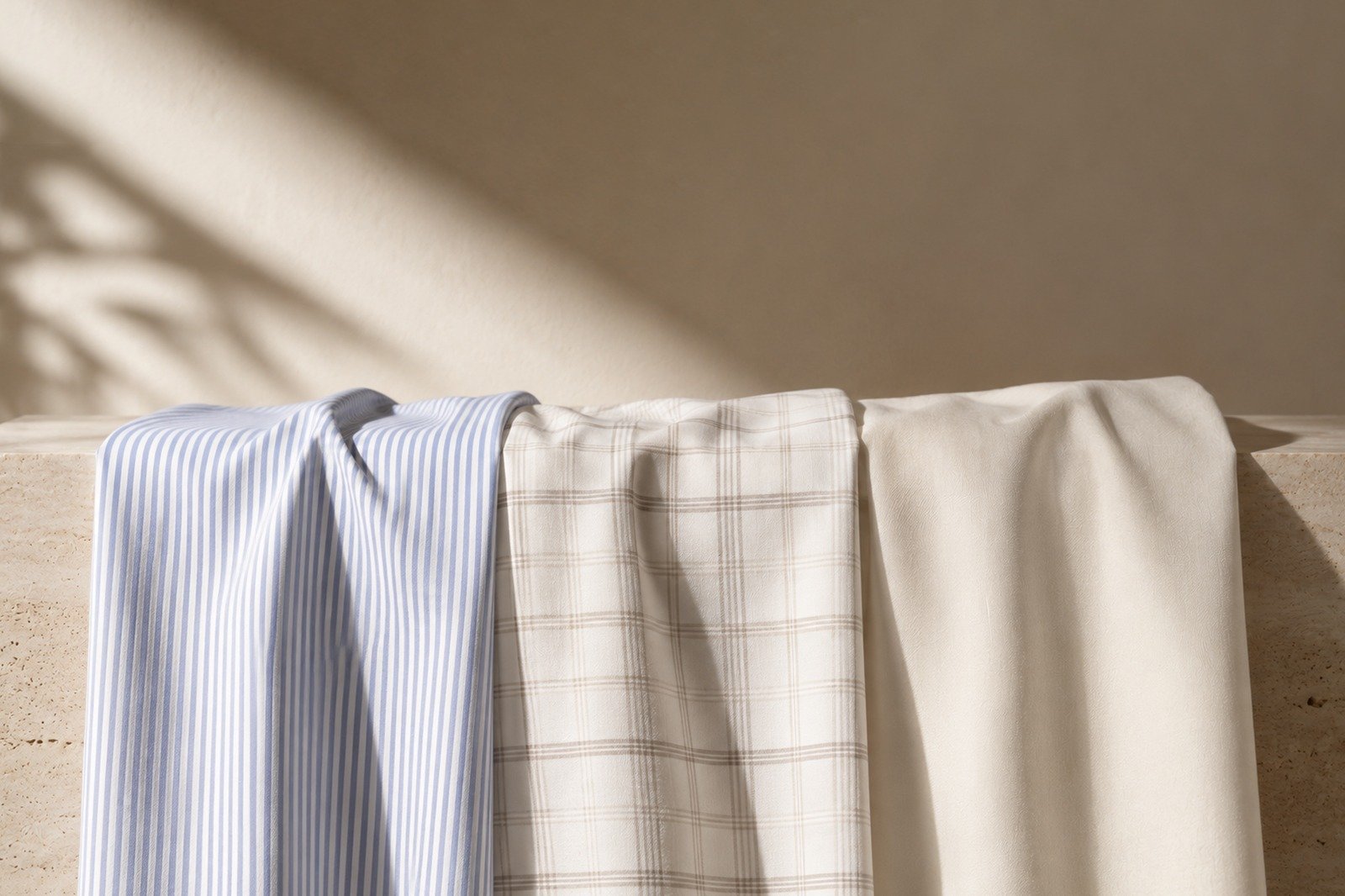
Fashion collections are built on choices that look simple on the surface but influence the final product in significant ways. Fabric quality, colour, construction and finish all matter. One decision that often shapes the identity of a collection is the pattern of the shirt fabric.
Designers, retailers and apparel brands regularly choose between solid shirting fabrics, striped shirting fabrics and checked shirting fabrics when planning seasonal collections. Each pattern serves a different purpose and appeals to different customer preferences. Selecting the right option is not only about trends. It is about understanding where the garment will be worn, who will wear it and how it fits into the overall collection.
This guide explains how each pattern works, where it performs best and how businesses can make better sourcing decisions when building a balanced fabric range.
Why Fabric Patterns Matter In Shirt Collections
The pattern of a shirt influences first impressions before anyone notices its construction or fabric composition. Patterns create personality, communicate style and often determine where a shirt fits within a customer’s wardrobe.
For clothing brands and retailers, offering only one pattern category limits customer choice. A well-planned collection usually includes a combination of solids, stripes and checks because each serves a different market segment.
When sourcing premium shirting fabrics, businesses should think beyond appearance. They should also consider versatility, production planning, customer demand and long-term sales performance.
Solid Shirting Fabrics: Timeless, Versatile and Dependable
Solid shirting fabrics remain one of the strongest foundations for any apparel collection. Their clean appearance makes them suitable across industries, age groups and occasions.
Plain fabrics allow tailoring, fit and fabric quality to become the centre of attention. They also work well with formal wear, uniforms and premium business clothing.
Some of the most popular uses include:
- Corporate shirts
- Formal office wear
- Luxury casual shirts
- School and institutional uniforms
- Hospitality uniforms
- Premium essentials
Solid fabrics also make colour the defining feature. White, blue, grey and black continue to perform consistently across markets, while seasonal colours help brands introduce fresh collections without changing silhouettes.
From a production perspective, solids are easier to coordinate with trousers, jackets and accessories. They also simplify merchandising for retailers because customers often view them as wardrobe essentials.
Striped Shirting Fabrics: Professional With Visual Character
Striped shirting fabrics add movement without overwhelming the design. They provide visual interest while maintaining a polished appearance.
Different stripe widths create different effects. Fine stripes often suit formal business shirts, while wider stripes work well in smart casual collections.
Popular stripe variations include:
- Pinstripes
- Bengal stripes
- Pencil stripes
- Multi-colour stripes
- Vertical woven stripes
Vertical stripes naturally create a structured appearance, making them a preferred choice for office wear and executive collections.
Brands also appreciate stripes because they refresh familiar shirt designs without requiring dramatic changes. A classic shirt pattern can feel entirely new simply through a different stripe arrangement or colour combination.
For retailers, striped shirts often attract customers looking for variety while remaining within a comfortable style choice.
Checked Shirting Fabrics: Casual Style With Lasting Appeal
Checked shirting fabrics introduce texture, depth and personality into a collection. They are widely used in casual wear, weekend clothing and contemporary fashion ranges.
Checks vary significantly in scale, colour and construction, allowing designers to create diverse collections from a single design concept.
Common check styles include:
- Gingham
- Tattersall
- Windowpane
- Tattersall grid
- Madras
- Tattersall mini checks
Each style offers a distinct visual identity while maintaining broad customer appeal.
Checked fabrics often work particularly well in:
- Casual shirts
- Weekend collections
- Outdoor-inspired fashion
- Smart casual wardrobes
- Layering pieces
Because checks naturally create visual interest, they require minimal styling, making them popular among customers who prefer effortless dressing.
Matching Patterns With Different Customer Segments
Successful collections begin with a clear understanding of the target customer.
Every customer group shops with different priorities. Selecting the right shirt fabric supplier involves choosing patterns that match those buying habits.
Corporate professionals
Business environments usually favour:
- Solid shirts
- Fine stripes
- Subtle woven textures
These options offer versatility throughout the working week.
Smart casual consumers
Customers seeking flexible wardrobes often purchase:
- Bengal stripes
- Windowpane checks
- Soft coloured solids
These fabrics transition comfortably between work and social occasions.
Lifestyle and casual brands
Relaxed collections frequently include:
- Gingham checks
- Madras checks
- Larger plaid designs
- Earth-toned solids
These patterns suit informal dressing while maintaining a refined appearance.
Understanding these preferences helps brands reduce unnecessary inventory and improve collection planning.
Building A Balanced Shirting Collection
Many successful apparel brands avoid relying on a single pattern category.
Instead, they create balanced collections that include all three.
A practical approach might include:
- Around 40% solid shirting fabrics for timeless wardrobe essentials
- Around 30% striped shirting fabrics for business and smart casual wear
- Around 30% checked shirting fabrics for lifestyle and casual collections
The exact ratio depends on the brand’s target audience, pricing strategy and retail channel, but maintaining variety allows businesses to serve a wider customer base without creating unnecessary complexity.
Choosing The Right Fabric Beyond The Pattern
While patterns influence appearance, fabric quality determines long-term customer satisfaction.
When sourcing cotton shirting fabrics, businesses should evaluate several important factors.
Fibre quality
Long staple cotton offers a smoother finish, better durability and greater comfort.
Weave construction
Different weaves influence texture, appearance and performance. Poplin, twill, Oxford and dobby each create distinct characteristics suitable for different collections.
Colour consistency
Reliable dyeing ensures every production batch maintains uniform shades, helping brands achieve consistent garment quality.
Fabric finishing
Professional finishing improves softness, stability and overall appearance while supporting easier garment production.
Reliable availability
Consistent stock supports repeat production without unnecessary sourcing delays.
Choosing an experienced fabric manufacturer in India helps businesses maintain quality across every stage of production.
How Patterns Influence Merchandising
Patterns affect how customers browse, compare and purchase garments.
Solid shirts usually attract customers looking for dependable wardrobe essentials. Stripes often appeal to professionals who want subtle variation. Checks attract shoppers seeking relaxed and contemporary styling.
Displaying these categories separately creates a more organised shopping experience.
For fashion brands selling online, clear product categorisation also improves navigation. Customers searching specifically for striped shirts or checked shirts can quickly find suitable options, creating a smoother purchasing experience.
From an inventory perspective, balanced pattern planning also reduces the risk of overdependence on seasonal fashion cycles.
Trends May Change, But Versatility Remains Valuable
Fashion trends continue to introduce new colours, scales and pattern combinations each season. Some years favour bold stripes. Others see renewed interest in oversized checks or understated solids.
Strong collections are not built around short-lived trends alone.
Brands that consistently perform well usually combine trend-driven pieces with dependable classics. Solid shirts remain relevant because they offer flexibility. Stripes continue to support professional dressing. Checks maintain their place in casual fashion.
This balanced approach creates collections that remain commercially practical while still offering customers fresh choices.
Partner With The Right Fabric Expert
Choosing between stripes, checks and solids is not about identifying one pattern as the best. Each serves a specific purpose within a successful collection.
The right decision depends on your customer, your brand positioning and the role each shirt plays within your product range. By combining quality fabrics with thoughtful pattern selection, businesses can create collections that remain relevant across seasons while meeting changing customer expectations.
Build Your Next Shirting Collection With Cirocco Fabric
At Cirocco, we supply premium cotton shirting fabrics designed for brands, retailers and garment manufacturers who value consistency, craftsmanship and long-term performance. With an extensive collection of solid, striped and checked shirting fabrics, fast availability and over 90 years of textile expertise, we help businesses source fabrics with confidence.
Speak with the Cirocco team today to explore our latest shirting collections and find fabrics that bring your next collection to life with quality, reliability and timeless style.
FAQ
1. Which shirting pattern is best for year-round collections?
A combination of solids, stripes and checks works best for year-round collections. Solids provide timeless essentials, while stripes and checks add variety that appeals to different customer preferences and occasions.
2. Does the fabric pattern affect the quality of a shirt?
No. The pattern influences the appearance of the shirt, while quality depends on factors such as the fibre, weave, finishing and manufacturing process. Choosing a trusted fabric supplier ensures both style and performance.
3. Why should apparel brands source shirting fabrics from Cirocco?
Cirocco offers a wide range of premium solid, striped and checked shirting fabrics backed by over 90 years of textile expertise, consistent quality, fast dispatch and dependable supply for brands, retailers and garment manufacturers.