

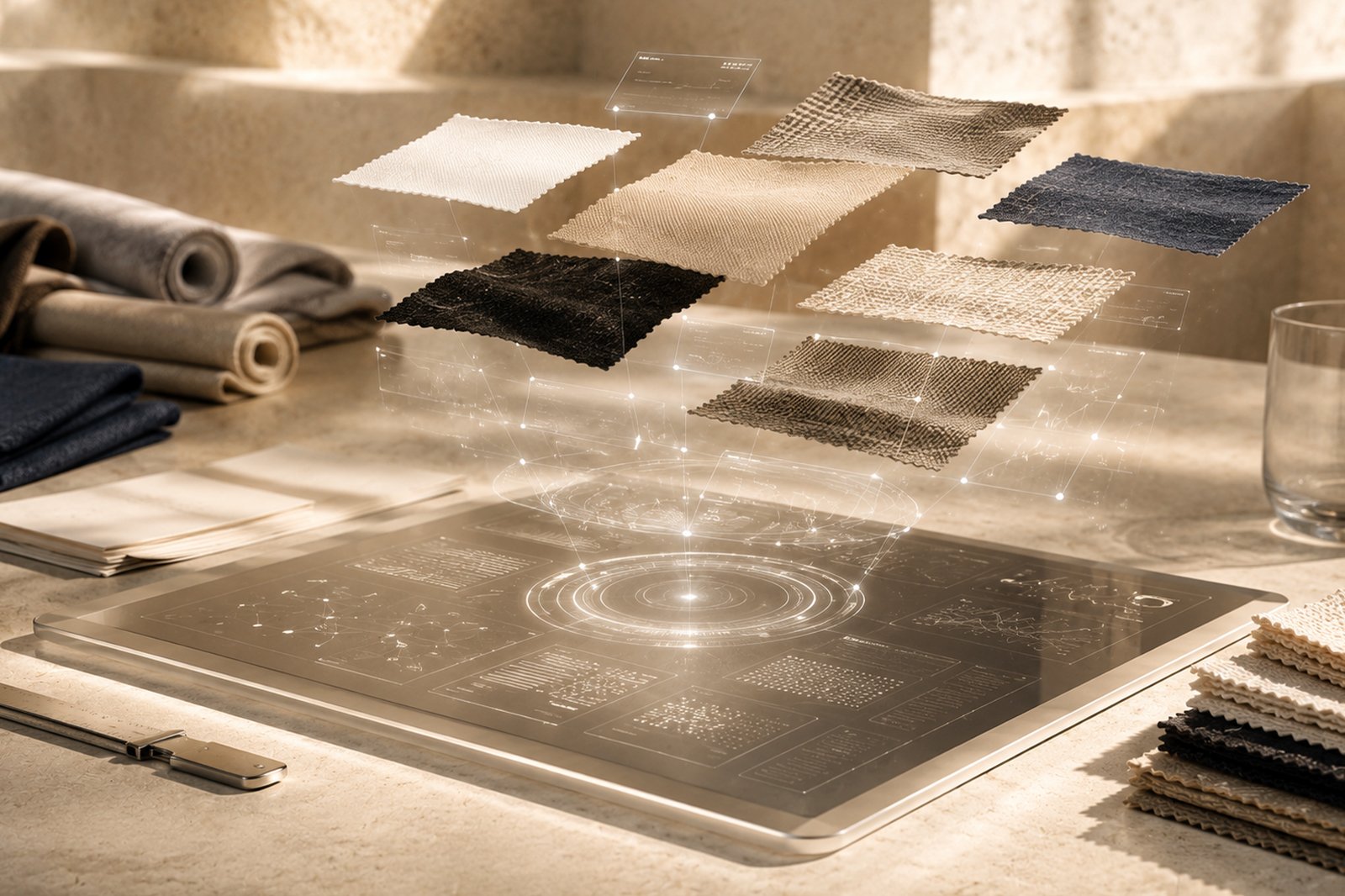
Every collection begins with an idea, but it is the fabric that brings that idea to life. A designer may be inspired by a runway look, a retailer may receive a customer reference or a buying team may come across a fabric that perfectly matches an upcoming collection. The challenge begins when it is time to find that fabric.
Fabric sourcing has traditionally been a process that demands patience. It often involves searching through extensive catalogues, sharing reference images with suppliers, requesting samples and comparing multiple options before arriving at the right choice. For fashion brands, every additional step adds time to product development.
Today, AI is changing that process. Instead of relying solely on manual searches and lengthy back-and-forth communication, businesses can use technology to identify similar fabrics in a matter of moments. It is making fabric sourcing faster, more intuitive and more efficient, while allowing sourcing teams to focus on making informed decisions rather than spending hours looking for the right starting point.
Why Traditional Fabric Sourcing Takes Longer Than It Should
Finding the right fabric has never been as simple as matching a colour or a pattern. Two fabrics may look similar in a photograph yet differ significantly in weave, texture, weight or finish. Identifying those differences often requires experience, careful evaluation and discussions with suppliers.
The process usually starts with a reference image or a fabric sample. From there, sourcing teams describe what they need, suppliers suggest suitable options, samples are requested and comparisons begin. If the first selection does not meet expectations, the search continues until the right match is found.
For fashion brands working on seasonal collections or retailers preparing for new launches, these sourcing cycles can influence production timelines. Even experienced teams spend valuable time browsing product catalogues and shortlisting possibilities before making a final decision.
The challenge is not the availability of fabrics. It is finding the right one quickly from thousands of available options.
AI Is Making Fabric Sourcing Faster And More Visual
This is where AI is making a significant difference.
Instead of attempting to describe a fabric by email or messaging, customers may simply upload a photograph. Before finding fabrics with comparable visual properties, AI evaluates observable characteristics such as pattern, colour and overall appearance.
This alters the start point of the sourcing process. Rather than manually browsing through hundreds of listings, users are presented with suitable selections almost immediately. What was once wholly reliant on memory, manual browsing or lengthy conversations can now start with a single image.
For design teams, buyers and merchandisers, this means less time seeking and more time assessing textiles that truly meet their needs.
Artificial intelligence is not replacing human skill. It eliminates superfluous effort during the discovery step, making the entire process more efficient from the start.
What This Means For Fashion Brands And Retailers
Faster access to relevant fabric options has a direct impact on how collections move from concept to production.
Design teams can validate ideas sooner without waiting for lengthy searches. Buying teams can communicate more clearly with suppliers because everyone begins with a stronger visual reference. Product development becomes more organised as sourcing decisions happen with greater confidence.
For businesses managing multiple collections throughout the year, these improvements can save considerable time. Instead of treating fabric discovery as a lengthy research exercise, teams can focus on comparing suitable options and selecting materials that align with their design and commercial goals.
As AI continues to support fabric sourcing, it also encourages closer collaboration between designers, sourcing professionals and suppliers. Everyone works from the same visual reference, reducing confusion and making discussions more productive.
The result is a sourcing process that feels less complicated and far more responsive to the pace at which modern fashion businesses operate.
AI Can Find Similar Fabrics. Expertise Chooses The Right One.
While AI can identify fabrics that look similar, selecting the right fabric still depends on knowledge and experience.
Visual appearance is only one part of the decision. Factors such as composition, weave, weight, finish, durability and intended application all influence how a fabric performs once it is turned into a finished garment. A shirt fabric, for example, must offer the right balance of comfort, structure and durability, while another application may demand entirely different characteristics.
That is why AI works best as a sourcing assistant rather than a replacement for textile expertise. It helps narrow the search, but experienced professionals ensure that the final selection meets both creative and technical requirements.
Technology accelerates the search. Expertise ensures the right choice.
How Cirocco Fabrics Is Bringing AI Into Fabric Sourcing
Cirocco Fabrics is a recognised fabric supplier in India that focuses on providing top-quality fabrics to businesses. The newest innovation takes this dedication further by helping clients search fabrics more easily.
The AI-powered Fabric Finder Tool allows users to upload a fabric image directly to the website. The tool examines the image, detects visual features like pattern and colour and then searches Cirocco’s collection to offer similar fabric options.
Customers can start with the image that inspired them instead of manually navigating through hundreds of categories. For those seeking luxury shirt fabrics or exploring options for a new collection, this tool offers a quicker, more intuitive way to connect ideas with existing inventory.
Cirocco’s vast textile experience and large selection of products, along with the Fabric Finder Tool, assist businesses in cutting down the time from creating a creative idea to sourcing the right fabric.
Smarter Sourcing Starts With The Right Technology And The Right Partner
The future of fabric sourcing is not about replacing people with technology. It’s about providing designers, buyers and retailers with better tools to work more efficiently.
AI allows the sourcing to begin by providing a simple image, cutting down the time spent looking and making it easier to choose the right fabrics. Behind this technology is an experienced fabric supplier, so businesses get the speed of AI and the trust that comes with skilled assistance.
Cirocco Fabrics blends innovation and decades of fabric knowledge to make fabric sourcing easier for current fashion enterprises. If you have a fabric reference and want to uncover similar options quickly, the AI-powered Fabric Finder Tool is a smarter approach to start your search.
FAQ
How does the Cirocco Fabric Finder Tool work?
Cirocco Fabric Finder Tool employs artificial intelligence to assess a photograph of fabric submitted by the user. It identifies visual features such as the pattern, colour and general look and then matches them to similar fabrics available in Cirocco’s stock. This helps fashion retailers and designers identify relevant fabric choices quicker than having to manually scroll through hundreds of products.
Can AI identify the exact fabric composition from a photo?
Not entirely. AI is able to detect visual features such as patterns, colours and textures, but it can’t reliably tell from a photo alone what a fibre is made of. Always confirm the technical characteristics like composition, weave, GSM and finishing with the fabric supplier before making a sourcing selection.
What factors should fashion brands consider before sourcing fabrics in bulk?
Apart from design and colour, brands should assess factors such as fabric quality, consistency across batches, minimum order quantities, lead times, colour fastness and performance for the intended garment. Evaluating these aspects early helps reduce production issues and ensures the final product meets quality expectations.
Why are more fashion brands using AI for fabric sourcing?
AI helps brands shorten the time spent searching for suitable fabrics by quickly analysing visual references and presenting relevant matches. This allows design and sourcing teams to make faster decisions, respond to trends more efficiently and streamline product development without compromising quality.