

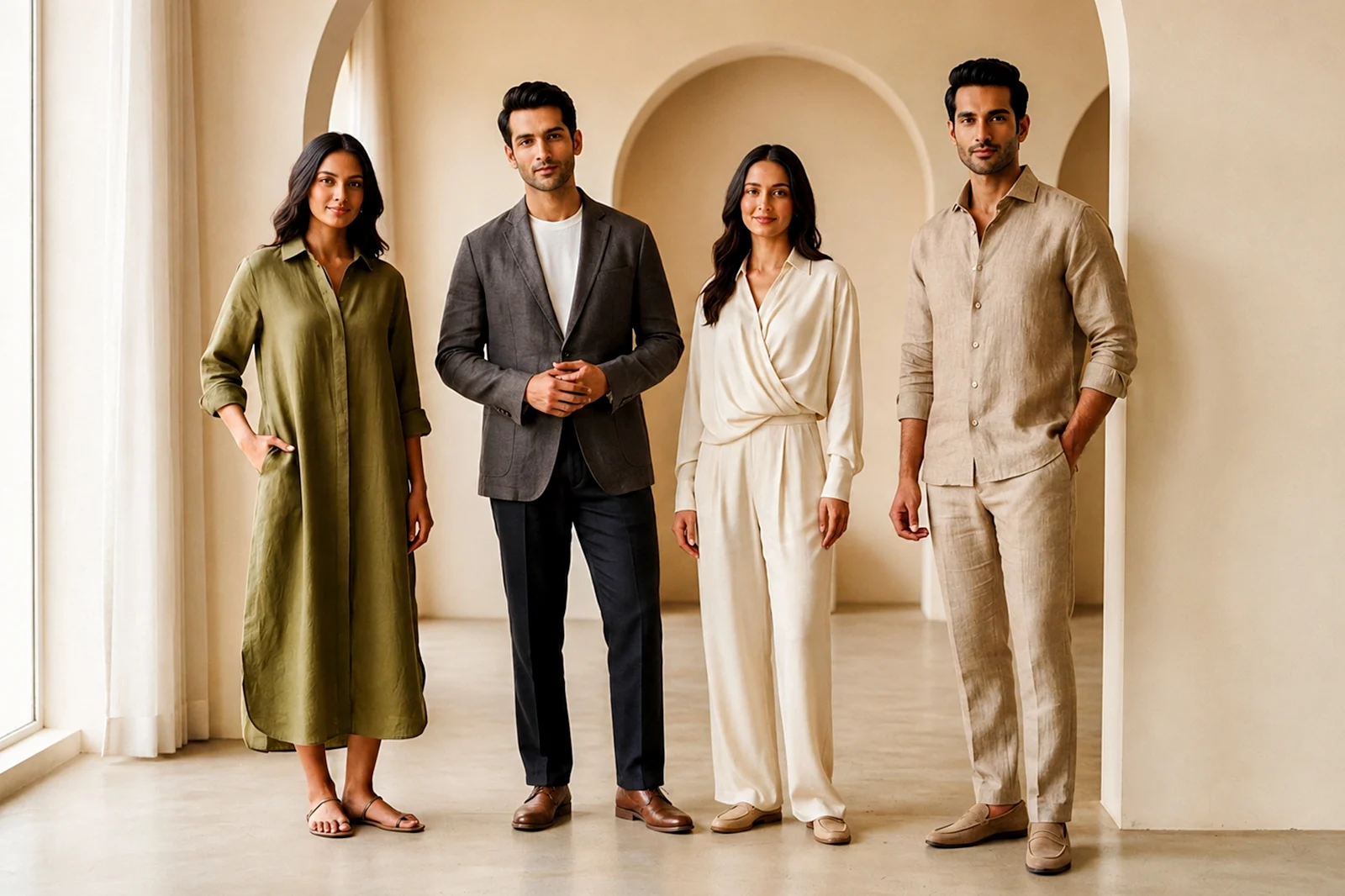
There is a common misconception that fashion trends begin on the runway. In truth, they begin much earlier, in the mills, laboratories and ateliers where fabric is developed. Long before a designer sketches a silhouette, someone has already decided what that garment will feel like, how it will move and what story it will tell. At Cirocco Fabric, we believe this is where real fashion leadership happens. Staying ahead of trends is not about guessing what is popular. It is about understanding fibre, craftsmanship and culture well enough to shape what comes next.
Why Every Fashion Trend Really Begins With the Fibre
Every remarkable garment begins with a remarkable fabric and every remarkable fabric begins with fibre choice. Take Egyptian cotton, long regarded as the gold standard in premium textiles. Its extra-long staple fibres create a smoother, stronger yarn, which is why it has been the fabric of choice for luxury shirting and fine bedding for generations. What is changing now is how mills use it. Rather than treating Egyptian cotton as a finished product, textile innovators are blending it with technical fibres to introduce stretch, breathability and easy-care properties, all without sacrificing that signature softness.
Linen tells a similar story. Once considered purely a summer fabric, it has become central to the “quiet luxury” movement sweeping premium fashion. Its natural texture, relaxed drape and tendency to soften with every wash make it feel effortlessly elegant rather than overly polished. Linen also happens to be breathable and biodegradable, which places it right at the intersection of two major forces shaping fashion today: comfort and conscience.
When mills understand fibres this deeply, they are not reacting to trends. They are quietly setting them.
The Textile Innovations Quietly Shaping Premium Fashion
Premium fabric houses invest heavily in research and development and this is often where the next big shift in fashion is first felt. Smart finishes such as moisture-wicking treatments, temperature regulation and wrinkle resistance are increasingly expected in fabrics that still look and feel luxurious. The challenge and the art, lies in adding performance without diminishing the tactile richness that makes premium fabric feel premium in the first place.
This is also where fibre blending becomes interesting. Merino wool, prized for its fineness and natural temperature control, is being combined with technical yarns to create fabrics suited to both tailoring and a more elevated, performance-driven wardrobe. Silk, with its unmistakable drape and sheen, is being engineered for easier care while retaining its heritage appeal. None of this happens overnight. It is the result of years of experimentation long before a single collection reaches the shop floor.
Sustainable Fabrics: The Trend That Has Become the Standard
If there is one force reshaping the fabric industry more than any other, it is sustainability. Today’s consumer wants to know where their clothing comes from and premium fabric producers have had to respond with transparency and genuine innovation rather than surface-level gestures.
Materials such as organic cotton, Tencel and recycled polyester are no longer niche alternatives. They sit at the very centre of forward-thinking collections. Tencel, in particular, has won favour for its silky drape and biodegradable properties, making it a favourite among designers who want sustainability without compromising on elegance. Deadstock fabric, meanwhile, is playing a growing role in the circular fashion movement, giving unused, high-quality textiles a second life rather than letting them go to waste.
Certifications such as GOTS and OEKO-TEX have also become quiet signals of trust. They tell a discerning buyer that a fabric has been produced responsibly, from fibre to finish. For premium fabric houses, sustainability is not a passing trend to keep pace with. It is fast becoming the baseline expectation.
Fabric Forecasting: How Colour and Texture Trends Are Predicted
Long before a colour becomes fashionable, someone has already predicted it. Premium fabric producers work closely with global forecasting agencies, studying cultural shifts, consumer behaviour and even economic sentiment to anticipate the palettes and textures that will define a season, sometimes years in advance.
This is a delicate balancing act. Timeless neutrals need to sit comfortably alongside bolder, more experimental textures such as jacquard weaves, bonded fabrics or brushed finishes. Get it right and a fabric feels both current and enduring, the kind of textile a designer wants to build a collection around rather than a single garment.
Craftsmanship Reimagined: Heritage Techniques Meet Modern Fashion
There is something reassuring about traditional techniques such as hand weaving and natural dyeing. They carry a sense of heritage and authenticity that machine-made fabric simply cannot replicate. The most successful premium fabric houses have learned to blend this artisan knowledge with modern efficiency, allowing time-honoured techniques to be reinterpreted for a contemporary market without losing their soul.
This is often what separates a truly premium fabric from a merely expensive one. It is not just the fibre or the finish, but the story and skill woven into every metre.
Designer Collaboration: The New Competitive Edge in Fabric Innovation
Perhaps the most significant shift in recent years has been the move away from fabric houses simply supplying finished goods. Today, the most forward-thinking mills work directly alongside designers from the earliest stages of the creative process, developing bespoke fabrics tailored to a specific vision.
This kind of collaboration means designers are no longer limited to what is already on the shelf. Instead, they can help shape something entirely new, whether that is a custom blend, a unique finish or an exclusive colourway. For fabric producers, this shift from supplier to creative partner has become one of the strongest ways to stay relevant in a fast-moving industry.
From Concept to Collection: How Digital Tools Are Speeding Up Fashion
Digital tools have also transformed how quickly fabric innovation reaches the market. Three-dimensional fabric simulation allows designers to see how a textile will drape and move before a single sample is produced. Digital printing offers faster, more precise and often more sustainable ways to bring colour and pattern to life. Together, these tools are shortening the gap between concept and finished collection, allowing premium fabric houses to respond and often anticipate, trends with far greater agility than before.
Staying Ahead of Fashion Trends Is a Mindset
Ultimately, staying ahead of fashion trends has very little to do with chasing what is popular. It is about deep expertise in fibre, an unwavering commitment to sustainability, meaningful collaboration and a genuine curiosity about where fashion is heading next. At Cirocco Fabric, this is the philosophy that guides everything we create.
The next great fashion trend will not begin on a runway. It will begin, as it always does, with fabric.
FAQ
1. What makes a fabric "premium"?
A premium fabric is defined by the quality of its raw fibres, the precision of its weaving or knitting and the consistency of its finish. Factors such as strength, softness, colour fastness, breathability and longevity all contribute to whether a fabric is considered premium. It's a combination of superior materials and expert craftsmanship.
2. Why do luxury fashion brands invest more in fabric than fast fashion brands?
Luxury brands see fabric as the foundation of the final garment. Investing in better textiles results in improved comfort, a refined appearance, longer garment life and a stronger brand reputation. Premium fabrics also allow designers to achieve better tailoring, drape and finish, which are difficult to replicate with lower-grade materials.
3. How can fashion brands tell if a fabric will remain relevant beyond one season?
Brands assess factors such as fibre composition, versatility, durability and consumer demand instead of focusing only on seasonal colours or prints. Fabrics that balance timeless appeal with modern performance are more likely to stay relevant across multiple collections and changing market trends.
4. How do premium fabric suppliers maintain consistent quality across bulk orders?
Leading fabric manufacturers follow strict quality control processes throughout spinning, weaving, dyeing and finishing. They regularly test for colour consistency, fabric strength, shrinkage, dimensional stability and finish, ensuring every production batch meets the same quality standards.
5. Why is choosing the right fabric supplier as important as choosing the fabric itself?
A reliable fabric supplier like Cirocco Fabrics offers more than quality materials. They provide technical expertise, dependable lead times, consistent production standards and support throughout the sourcing process. This helps fashion brands reduce production risks, maintain product quality and bring collections to market with greater confidence.