

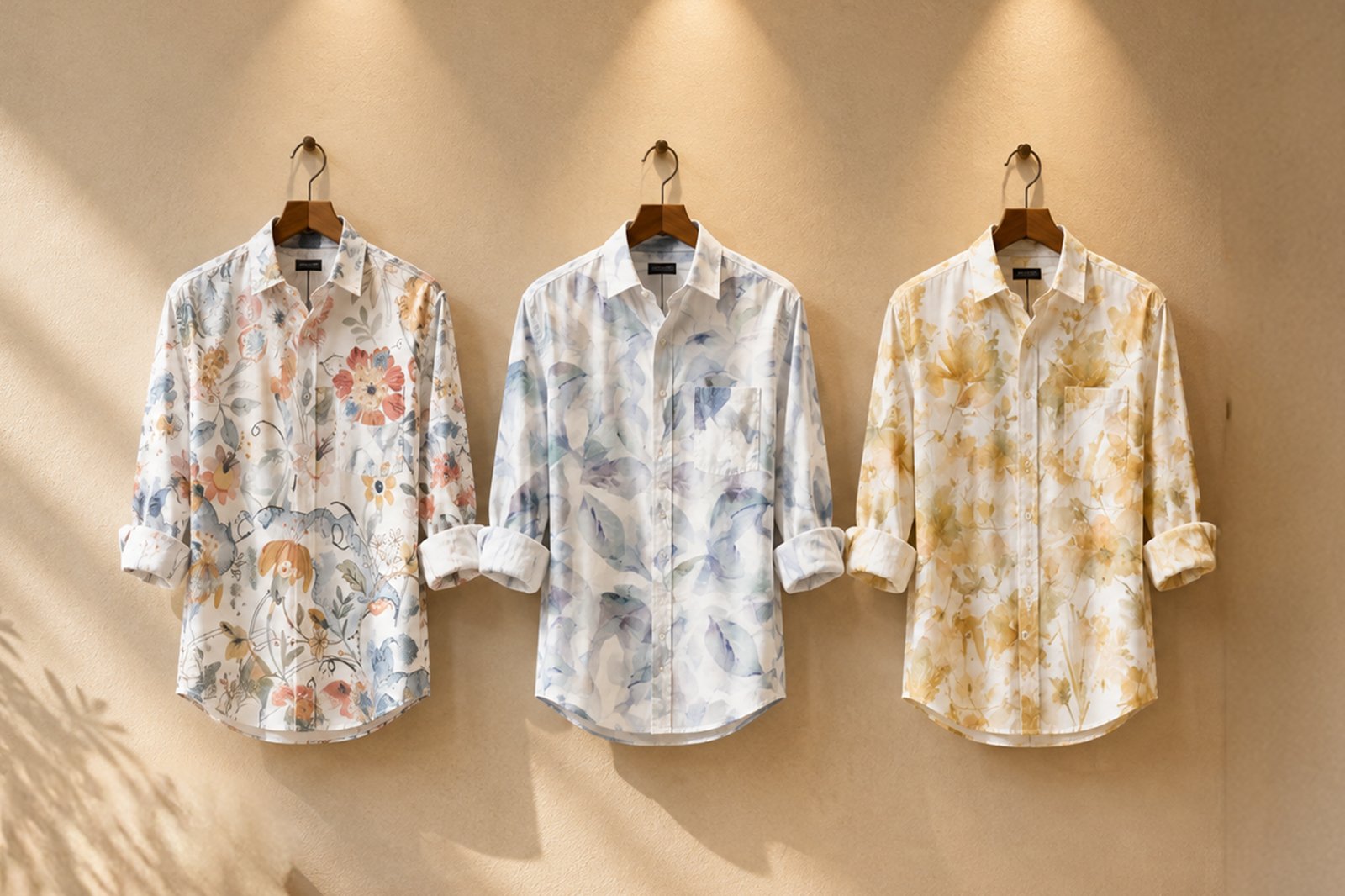
A printed shirt can change the character of an outfit in seconds. The right print can make a shirt look relaxed, refined, festive or distinctly summery. The wrong combination of print, fabric, colour and occasion can make the same shirt feel out of place.
For this reason, choosing a printed shirt involves more than picking a pattern you like. The scale of the print, the type of fabric, the colour palette and the setting all influence how the finished shirt looks and feels.
Start By Understanding The Print
A print is built around motifs. A motif is an individual design element, such as a flower, leaf, geometric shape or paisley. When these elements are arranged and repeated across the fabric, they form a pattern.
Printed shirting can therefore look very different depending on how the motifs are arranged. Some designs use small repeated elements across the entire fabric, while others use larger motifs with more space between them.
The main print styles include:
- Floral prints: Flowers, leaves and botanical elements. They can range from small and subtle to large and expressive.
- Geometric prints: Squares, circles, lines, diamonds and other structured shapes. These usually create a sharper, more contemporary appearance.
- Paisley prints: Curved, teardrop-shaped motifs with a long history in textile design. They work particularly well for dressier and occasion shirts.
- Stripes and checks: Familiar patterns that can range from traditional to highly modern depending on colour, scale and arrangement.
- Abstract prints: Irregular shapes, brush-like marks and artistic compositions that give the shirt a more individual character.
- Conversational prints: Small illustrations or recognisable objects arranged across the fabric. These are commonly used for relaxed and resort-style shirts.
Understanding the type of print makes it easier to match the shirt to the occasion.
Pay Attention To Print Scale
Print scale has a major effect on how a shirt looks.
Small prints tend to create a quieter appearance. They are easier to wear for smart-casual settings and can work well for people who want pattern without making it the focus of the outfit.
Medium-sized prints offer more visual presence while remaining relatively easy to style. They are versatile for dinners, social events and casual offices with relaxed dress codes.
Large motifs create a stronger statement. They suit holiday shirts, evening occasions and fashion-led collections where the print is intended to be the main feature.
The size of the print should also work with the proportions of the wearer and the shirt itself. A large motif can look crowded on a smaller shirt panel, while a tiny print can lose its character across a very large surface.
The Fabric Changes The Character Of The Print
The same design can look completely different on different fabrics.
Cotton is one of the most versatile choices for printed shirts. Its structure allows detailed prints while offering the comfort required for everyday shirting. Fine cotton qualities can give a print a cleaner and more refined appearance.
Linen has a more naturally textured surface and a relaxed character. Printed linen shirts work particularly well for summer dressing, holidays and informal occasions.
Cotton-linen fabrics sit between the two. They retain some of cotton’s structure while introducing the lighter, more relaxed character associated with linen.
The quality of the base fabric also matters. A sophisticated print deserves a fabric with an appropriate handle, construction and finish. Egyptian cotton and Supima cotton, for example, are premium cotton options used where softness, quality and a refined surface are important.
For fabric suppliers and brands, the choice of base fabric should happen alongside print development rather than after it.
Choosing A Printed Shirt For Work
Printed shirts can work in professional wardrobes when the design is restrained.
Look for smaller motifs, subtle geometric patterns or understated stripes and checks. A controlled colour palette also makes the shirt easier to pair with tailored trousers.
For a conservative workplace, keep the print relatively quiet and let the fabric quality provide much of the sophistication.
A small geometric print on fine cotton, for example, can sit comfortably with navy or charcoal trousers. A subtle paisley in muted colours can also work for business-casual settings.
The key consideration is the dress code of the workplace. A bold tropical print belongs in a different setting from a small all-over geometric pattern.
Choosing A Shirt For Smart-Casual Occasions
Smart-casual dressing gives you more room to use pattern.
Medium-scale florals, abstract prints, paisleys and stronger checks can add personality without making the outfit overly formal.
The rest of the outfit should provide some visual balance. Pair a printed shirt with solid trousers or jeans in neutral colours. If the shirt already contains several colours, picking one of those colours for the trousers can create a more considered combination.
Fabric also plays a role here. Cotton works across a broad range of settings, while linen and cotton-linen blends give the outfit a more relaxed character.
Choosing A Printed Shirt For Weddings And Celebrations
Festive occasions allow more freedom with colour and pattern.
Paisleys, florals, intricate geometrics and decorative motifs can work particularly well for celebrations. Richer colours and more detailed designs can give the shirt a dressier character.
The fabric should match the occasion. Fine cottons and premium shirting fabrics can create a polished appearance, while textured cotton-linen options can suit daytime celebrations with a more relaxed dress code.
For formal events, consider the complete outfit before choosing the print. A highly detailed shirt paired with an equally busy jacket, trousers or accessories can create too much visual competition.
Choosing A Shirt For Holidays And Resort Wear
This is where printed shirts can be at their most expressive.
Tropical foliage, large florals, abstract designs, stripes and conversational prints all work naturally in resort wardrobes. Larger motifs and brighter colour combinations are easier to carry in relaxed settings.
Linen and lightweight cotton are particularly suitable for warm-weather dressing because their natural character complements the relaxed mood of holiday clothing.
The cut of the shirt matters too. Resort shirts often have a more relaxed silhouette, allowing larger prints to breathe across the garment.
Check The Direction Of The Print
Some printed fabrics have a clear direction. Others are designed to look the same when viewed from different angles.
A directional print may feature motifs that point upwards, downwards or towards a particular edge of the fabric. The cutting plan must account for this so the finished garment looks intentional.
This becomes particularly important with large motifs and engineered prints. Placement can determine which part of the design appears on the collar, pocket, front panel or back.
For manufacturers and designers, this makes fabric planning an important part of shirt development.
Think About The Whole Outfit
A printed shirt usually works best when the rest of the outfit gives the print room to stand out.
Solid trousers are the simplest pairing. Navy, beige, white, grey and denim can work with many printed shirt colour palettes.
You can also create a tonal outfit by picking a trouser shade that sits within the shirt’s colour family. This creates cohesion while allowing the print to remain the focal point.
Texture provides another way to add depth. A smooth printed cotton shirt paired with textured trousers can create contrast without introducing another competing pattern.
The Fabric Is Part Of The Design
A printed shirt starts with the relationship between the design and the fabric.
The print method, base cloth, yarn quality, weave, finish, colour and intended end use all contribute to the final garment. A print designed for fine cotton shirting may require a different approach from one developed for linen or a cotton-linen blend.
This is why fabric sourcing matters as much as pattern selection for brands and manufacturers developing printed shirting collections.
Find The Right Printed Shirt Fabric With Cirocco Fabrics
With more than 90 years in the textile industry, Cirocco Fabrics brings extensive experience in shirting fabrics, sourcing and fabric development.
Our range includes printed fabrics alongside premium cottons, Egyptian cotton, Supima cotton, linen, cotton-linen blends, jacquards and other shirting constructions. We work with garment manufacturers, retailers, designers, brands and exporters looking for fabrics suited to specific collections and production requirements.
If you are developing a printed shirt collection or looking for a particular fabric, print or finish, our team can help you identify the right material for the design and end use. Speak with us to discuss your fabric requirements.
FAQ
1. How do you know if a printed shirt is good quality?
Check the fabric’s weave, print clarity, colour consistency and finishing. A good-quality shirt should also hold its shape and colour after regular washing.
2. Can printed shirts be worn under a blazer?
Yes. Choose a smaller or more controlled print and pair it with a plain blazer. This creates a polished look while keeping the shirt as the focal point.
3. How should printed shirts be washed?
Follow the fabric’s care instructions. Washing at the recommended temperature, avoiding harsh detergents and drying away from direct sunlight can help preserve the print.
4. Are printed shirts suitable for all seasons?
Yes. The fabric can be selected according to the season. Lightweight cotton and linen suit warmer months, while denser cotton fabrics can work well in cooler weather.