

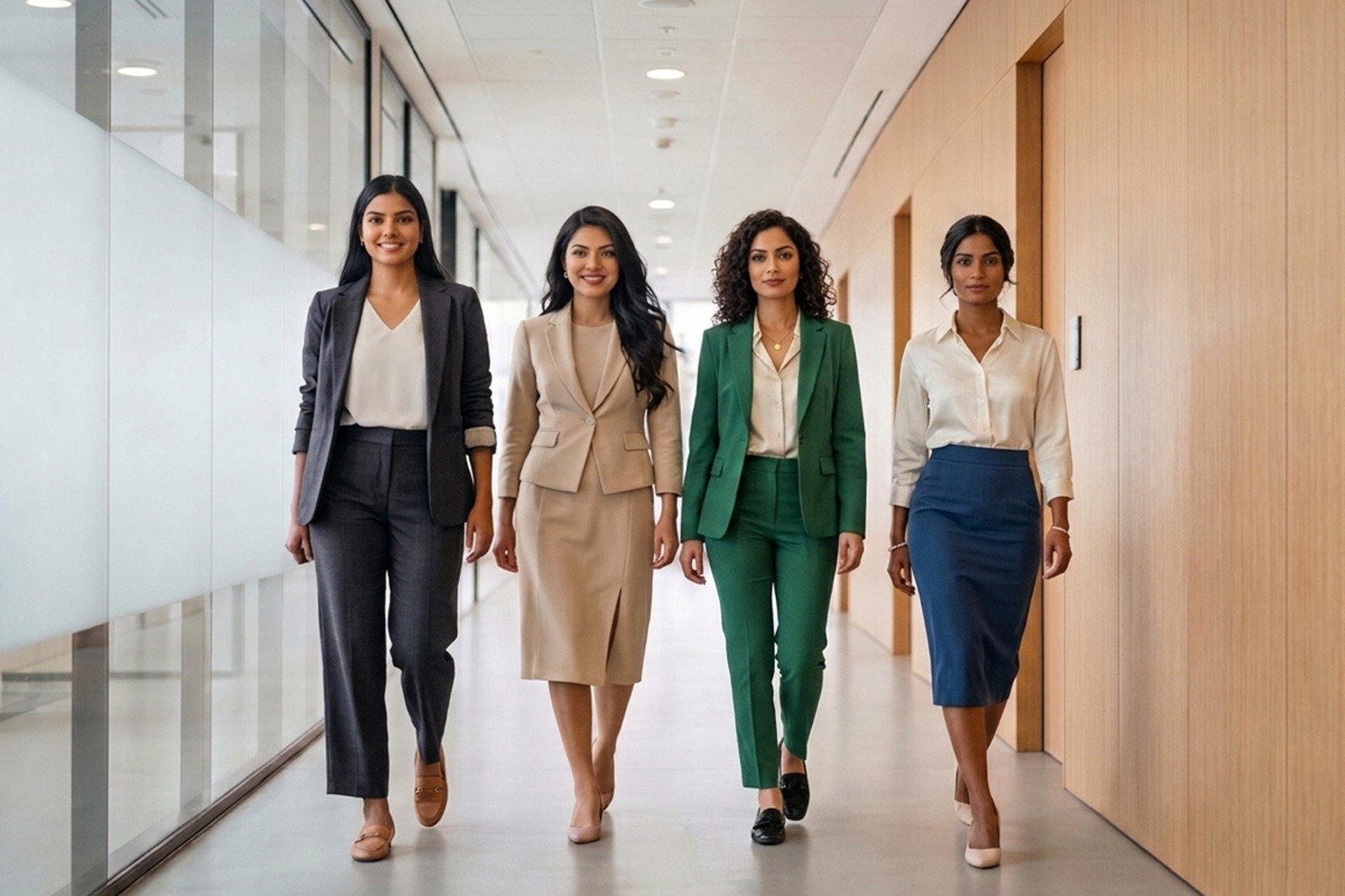
Walk into any office and you can tell a lot about a person before they even speak. The way someone dresses often gives the first hint of how they carry themselves, how seriously they take their work, and how they want to be seen.
Workplaces today look very different from what they used to be. Dress codes are more relaxed, hierarchies are less rigid, and comfort plays a bigger role than ever before. Still, one thing hasn’t changed. What you wear to work continues to shape how others perceive you, and even how you feel about yourself.
Office wear is no longer just about following rules. It is about finding the right balance between comfort, confidence and professionalism.
The Early History of Office Wear
Office wear was born from the growth of business culture in the 19th century. In the worlds of finance, law and commerce, men’s attire was black wool suits, neat shirts and polished shoes. Clothes were not merely about how they looked. It signified discipline, authority and social status.
Cloth also had a utilitarian function. Offices were not climate controlled, thus breathable fabrics such as wool and cotton were necessary to working long hours.
As the 20th century began and more women entered the workforce, their dress conformed to rigorous social standards. Modest skirts, blouses and fitted jackets were the order of the day. That altered in time. In the 1980s, power dressing became more sharply cut and more visually identifiable, especially for women building careers in corporate environments.
Office fashion has always marched with society. Workplaces evolved, and so did what people wore to work.
Why Office Wear Still Matters
Even in today’s relaxed work culture, clothing continues to influence how people are perceived.
Think about the days you dress well for work. You tend to sit straighter, speak with more clarity and feel more prepared. That shift is subtle, but it makes a difference. The right outfit can put you in the right mindset.
The same applies to how others see you. Colleagues and clients often notice small details like fit, fabric and overall presentation. You may not realise it, but these details quietly communicate professionalism and attention.
Office wear also plays a role in personal branding. Whether it is a client meeting, a presentation or even a video call, what you wear becomes part of how people remember you.
The Shift Towards Semi-Formal Dressing
Strict formal wear is no longer the default in most offices. Many workplaces today lean towards semi-formal dressing, where comfort and polish go hand in hand.
You will often see:
- Tailored trousers instead of full suits
- Oxford shirts worn without ties
- Lightweight blazers instead of heavy jackets
- Chinos, polos and textured shirts becoming everyday staples
This shift reflects how work culture has changed. Startups, creative industries and hybrid work environments have made dressing more flexible. People want to feel comfortable during long workdays, but they also want to look put together.
The goal now is balance. You don’t need to be overly formal, but you still need to look intentional.
The Role of Fabrics in Modern Office Wear
As office wear becomes simpler, fabric starts to stand out more. When designs are clean and minimal, the quality of the material becomes more visible.
Good fabric affects how a garment feels, how it drapes and how it holds up through the day.
- Supima cotton is known for its softness and strength. Shirts made from it feel smooth, hold their shape well and stay comfortable for long hours.
- Egyptian cotton offers a slightly more refined look with a natural sheen and excellent breathability. It works well for people who want something that feels premium without being too heavy.
- Linen blends are especially useful in warmer climates. They feel light, airy and relaxed, while still looking neat when tailored well.
Texture also plays an important role. Subtle patterns like fine stripes, dobby weaves or small checks add depth without being distracting.
In modern office wear, fabric is not just a detail. It often becomes the defining factor.
Men’s Office Wear Today
Men’s office fashion has become simpler and more versatile.
Full suits are still important in certain industries, but for everyday wear, most professionals prefer a more relaxed approach. A well-fitted shirt paired with tailored trousers is often enough to create a polished look.
Lightweight blazers are now designed for comfort, not just structure. Colours have also expanded beyond basic shades, with earthy tones and subtle textures becoming more common.
Today, the focus is clear. Clothes should look sharp, but they should also feel easy to wear throughout the day.
Women’s Office Wear in the Modern Workplace
Women’s office wear has seen a major shift over the years. What was once limited and structured has become far more flexible.
Modern work wardrobes include:
- Tailored co-ords
- Structured dresses
- Relaxed blazers
- Elegant shirts with softer silhouettes
The biggest change is adaptability. Women can move between formal and semi-formal styles depending on the setting, without losing their personal style.
Fabrics play a key role here as well. Breathable cotton, linen blends and lightweight wool help maintain comfort while still looking refined.
Today’s office wear allows for individuality, while still respecting the need to look professional.
The Fabric Behind Professional Dressing
No matter how skilfully a garment is cut, it’s the fabric that determines how it looks and feels in the long run.
This is when brands like Cirocco Fabrics come into play. The focus is on the creation of superior shirting textiles that cater to the needs of modern office attire. Egyptian cotton, Supima cotton and expertly developed blends are selected to offer a balance of comfort, durability and a crisp finish.
With office attire gradually moving more and more towards semi-formal designs, fabric quality becomes even more critical. Sometimes, a simple shirt created from the correct material can say more than an overcomplicated suit.
Finally, professional dressing is about finding pieces that feel good, look polished and get you through your day.
FAQ
What should I wear to a semi-formal office?
You can go with a well-fitted shirt, tailored trousers and clean shoes. You don’t always need a suit. A light blazer can help if you want to look more polished.
Is linen suitable for office wear?
Yes, especially in warmer weather. Linen blends work well because they feel light and breathable while still looking neat if they are properly tailored.
How can I look professional without wearing a suit?
Focus on fit, fabric and simple styling. A good shirt, well-fitted trousers and clean footwear can look just as professional as a full suit.