

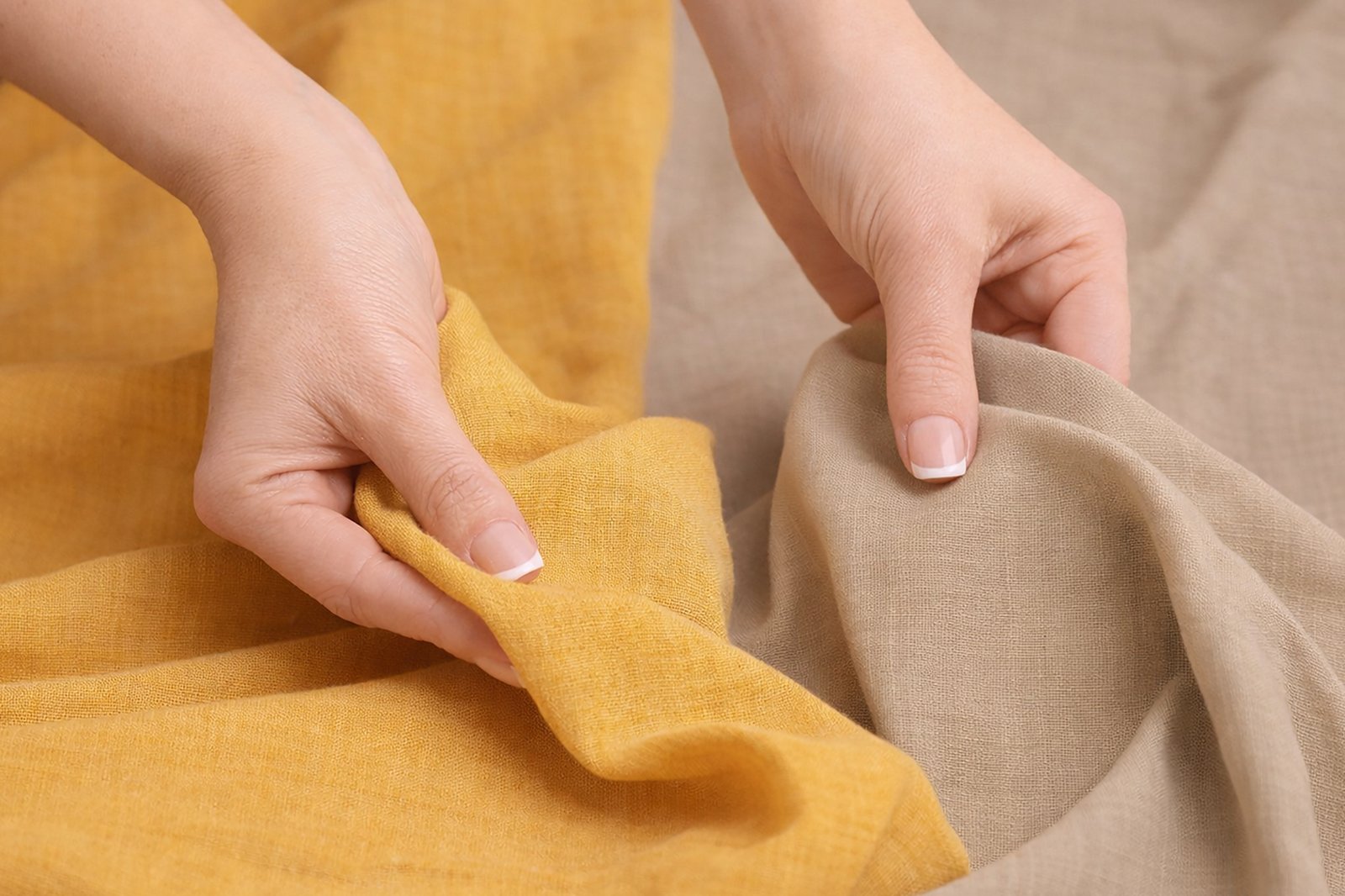
Walk into any clothing store and watch what people do. They do not begin by reading labels. They do not check the composition or study the stitching. Almost instinctively, they reach out and touch the fabric. A sleeve, a cuff, sometimes just the surface of the shirt. It happens quietly and without much thought.
Yet in that brief moment, something decisive takes place.
Before a word is spoken or a price is considered, the mind has already formed an opinion. It feels right, or it does not. And that feeling is often enough to move a product closer to purchase or further away from it.
This is not guesswork. It is rooted in how human perception works.
Psychologists refer to this kind of rapid decision making as Thin-slice judgment. The brain draws conclusions within seconds, often with very little information. In retail, especially in textiles, touch becomes one of the first and most powerful sources of that information.
Why Touch Carries So Much Weight
The sense of touch is deeply connected to how we interpret comfort, quality and trust. Unlike sight, which can be influenced by lighting or presentation, touch feels more direct. It is harder to disguise.
This is where Haptic perception comes into play. Through touch, the skin picks up subtle signals. Softness, weight, smoothness, even temperature. These signals travel quickly to the brain and are translated into impressions.
A soft fabric often suggests comfort and ease. A certain weight can signal durability. A smooth surface can feel refined and well-made. These are not conscious calculations. They are immediate responses shaped by experience.
What makes this interesting is that two fabrics can appear nearly identical on a hanger, yet feel entirely different in the hand. And it is this difference that often determines which one is chosen.
What Customers Are Really Feeling
When a person touches a shirt, they are not only feeling the outer surface. They are responding to a combination of factors working together.
The quality of the yarn determines how smooth or textured the fabric feels. The weave structure influences the fabric’s flexibility, breathability and movement. Finishing processes, which are often invisible to the eye, have a significant impact on softness and overall hand feel.
These elements are carefully controlled during manufacturing, but the customer perceives them as a single, unified sensation. It either feels right or doesn’t.
This is why fabric should not be judged solely on its appearance. The hand becomes the ultimate test.
The Business of First Impressions
For brands and retailers, this moment of touch is not a small detail. It is a critical point of decision.
In physical stores, customers are encouraged to interact with products for a reason. Touch increases confidence. It reduces uncertainty. It creates a sense of familiarity before the purchase is made.
In contrast, online retail faces a unique challenge. Without the ability to feel the fabric, brands rely on descriptions, images and sometimes swatches to bridge the gap. Even then, many customers hesitate until they can experience the material firsthand.
This is why the tactile quality of fabric has a direct impact on conversion. The first impression is not visual alone. It is physical.
The Work Behind the Feeling
What appears effortless to the customer is frequently the result of deliberate decisions made much earlier in the process.
The choice of fibres, the method of spinning, the precision of weaving, and the care taken during finishing all influence how a fabric is perceived. Achieving a consistent and appealing hand feel is not an accident. It necessitates experience, control and an understanding of how minor adjustments can affect the end result.
Established fabric manufacturers play an important role here.
At the manufacturing level, achieving that immediate sense of comfort and quality begins long before the fabric reaches the store. Cirocco Fabrics, one of India’s leading and oldest fabric manufacturers, are in the process of laying the groundwork for that experience. Our focus goes beyond visual appeal to the tactile qualities that customers instinctively respond to. For brands, this means the difference between a fabric that simply looks good and one that feels right the moment it is touched.
Before Fabric Is Seen, It Is Felt
In a retail environment filled with options, decisions are often made faster than we realise.
A customer may browse, compare and consider, but the first impression is already formed in those initial seconds of contact. Touch creates a sense of assurance that is difficult to replicate in any other way.
This is what makes fabric unique among products. It speaks through feeling before it is understood through detail.
And in those first few seconds, the outcome is often decided.
FAQ
Can touch really influence how expensive a shirt feels?
Yes, it can. People often associate softness and smoothness with higher quality, even if they do not know the technical details. A fabric that feels better in the hand is usually perceived as more premium, which can influence how much someone is willing to pay.
Why do some fabrics feel softer after washing?
This usually happens because the fibres relax and open up slightly after washing. Finishing chemicals used during manufacturing can also wash out, allowing the natural texture of the fabric to come through. In some cases, the fabric becomes more comfortable over time.
Is a heavier fabric always better quality?
Not always. Weight can convey durability, however this is dependent on the fabric's intended use. A lightweight shirt made of fine yarns can be high quality and more suited to warm conditions, yet a heavier fabric may be preferable for structure and durability. The quality of the fabric is determined by how it is created rather than its weight.
How do brands test the feel of a fabric before selling it?
Brands frequently employ touch panels where qualified workers may handle and compare materials. They look for softness, smoothness, flexibility and uniformity. Some use lab testing, but the human touch still plays a significant role in the ultimate judgement.