

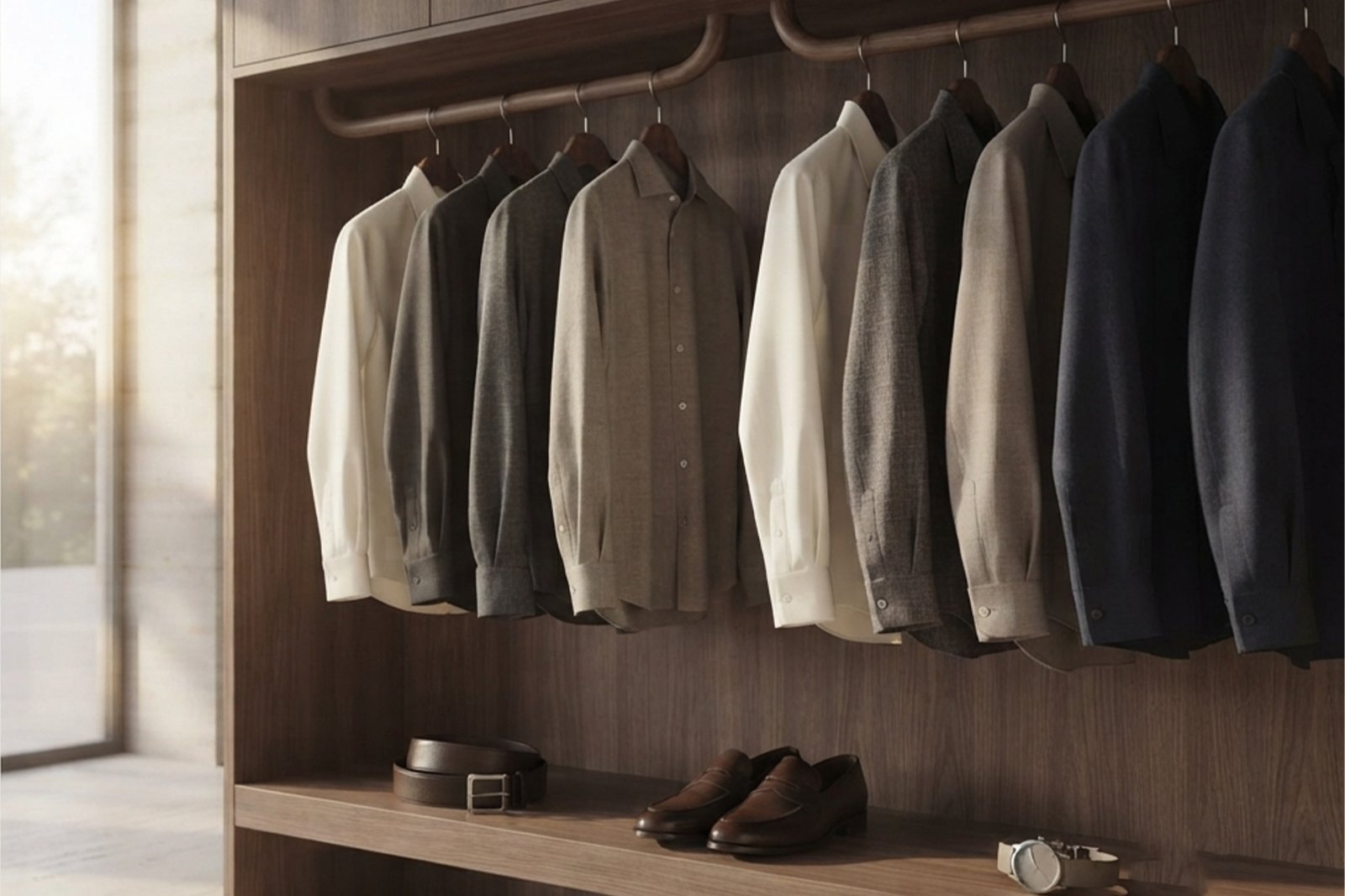
There was a time when looking expensive meant looking loud. Big logos, bold prints, unmistakable branding stitched across chests and sleeves. That era has quietly closed its doors. Walk through any menswear showroom or scroll through any well curated wardrobe account in 2026 and you will notice the same thing: restraint. Navy, cream, olive and chocolate brown. Soft shoulders. No shouting. Just fabric that feels right and fits properly.
This is quiet luxury and it has moved from a niche style preference to the defining mood of men’s fashion this year. But underneath the muted colour palettes and relaxed tailoring lies something more interesting than aesthetics. It is a shift in what men actually know about their clothes and fabric has become the quiet hero of the whole story.
From Logos to Labels: A Different Kind of Status Symbol
For more than a decade, streetwear culture taught men to read fashion through branding. A hoodie’s value was tied to the name printed across it. That logic has reversed. Today, the most coveted pieces in a man’s wardrobe rarely shout their price tag. Instead, the value sits in the weight of the cloth, the drape of a jacket or the way a shirt softens after a dozen washes rather than falling apart.
This shift mirrors a broader cultural mood. Years of economic uncertainty and a general fatigue with hype driven fashion cycles pushed buyers toward longevity over novelty. Add to that a generation of men who grew up watching wealthy, understated characters on screen and you get a style movement built on one simple idea: quality speaks for itself, so you do not have to.
The result is that men are no longer just asking, “Does this look good?” They are asking, “What is this actually made of?” And that question has opened the door to a level of fabric literacy that simply did not exist among the average shopper a few years ago.
Why Fabric Knowledge Has Become Mainstream
A decade ago, most men could tell you whether something was cotton or polyester and little else. Today, terms like staple length, GSM (grams per square metre), thread count and yarn weight come up casually in conversations about t-shirts and shirting. This change has not come from fashion magazines or in-store sales staff. It has come from the internet.
Menswear forums, YouTube breakdowns and short form videos comparing fabric swatches under magnification have quietly turned ordinary shoppers into amateur textile experts. A single video explaining why a Rs. 300 t-shirts might outperform a Rs. 2000 one, simply because of its cotton grade, can rack up millions of views. Comment sections turn into informal seminars on weave structures and finishing processes. People are no longer trusting a brand name to vouch for quality. They are learning to check for themselves.
This is arguably one of the most positive side effects of online fashion culture. Misinformation still exists, certainly, but there is now a large and growing community of buyers who understand that not all cotton is created equal, that a high thread count does not automatically mean better sheets or shirts and that durability often has more to do with fibre length than branding. Two names come up again and again in these conversations: Supima and Egyptian cotton.
Supima Cotton: The American Standard of Consistency
Supima, a name derived from “Superior Pima,” refers to an extra-long staple cotton grown exclusively in the United States, primarily across California, Arizona, Texas and New Mexico. It represents roughly one percent of all cotton grown worldwide and that scarcity is by design rather than accident.
What sets Supima apart is consistency. The fibre length, generally measuring at least one and a half inches, is tightly regulated by the Supima Association, which oversees the crop from cultivation through to the finished product. This level of oversight means that when a garment is labelled Supima, buyers can trust that it genuinely contains those long, strong fibres, rather than a blend padded out with shorter, lower grade cotton.
In practical terms, this translates to fabric that resists pilling, holds its shape over repeated washes and takes dye particularly well, which is why Supima pieces tend to keep their colour long after cheaper cotton has faded. It has a smooth, almost silky hand feel that becomes noticeably softer the more it is worn and washed, making it a quiet favourite for premium t-shirts, shirting and knitwear.
Egyptian Cotton: Heritage, but Buyer Beware
Egyptian cotton carries centuries of reputation behind it. Grown in the fertile soil of the Nile Delta, it has long been associated with luxury bedding and fine shirting, prized for its fine, lustrous fibres and a softness that many describe as silkier than other cottons.
Here is where internet fluent buyers have become noticeably savvier. Unlike Supima, the term “Egyptian cotton” on its own only refers to the country of origin and carries no guaranteed standard of quality. Genuine extra-long staple Egyptian cotton exists and is exceptional, but a significant proportion of cotton grown in Egypt is actually long-staple or even regular grade. Because the name alone carries such strong marketing power, it has historically been blended with cheaper fibres and still sold under the Egyptian cotton label.
This is precisely the kind of detail that has spread through online fashion communities over the past few years. Shoppers who once took “100% Egyptian cotton” labels at face value are now seeking out certification from bodies such as the Cotton Egypt Association before trusting a claim. It is a small but telling example of how accessible information has shifted the balance of power away from marketing copy and toward the consumer.
Reading the Fabric, Not Just the Price Tag
What makes 2026’s quiet luxury movement genuinely different from previous “buy quality” moments is this layer of informed scepticism. Men are no longer simply trusting that an expensive jacket must be well made or that a designer label guarantees superior fabric. They are checking fibre content, researching mills and comparing the weight and weave of garments before committing to a purchase.
This has had a knock-on effect on the industry itself. Brands that once relied on heritage and logo recognition are now expected to be transparent about sourcing. Italian mills supplying luxury houses are increasingly named directly in marketing copy, because buyers actually recognise and value those names now. Meanwhile, mid-range labels that genuinely invest in better cotton, wool or linen are finding an audience willing to pay a little more, provided the fabric story holds up to scrutiny.
It also explains why relaxed, unstructured tailoring has thrived alongside this fabric obsession. When a garment is not relying on padding, stiff interfacing or a tight cut to look sharp, the quality of the cloth itself has nowhere to hide. A linen blazer or a soft wool jacket only looks effortless if the fabric underneath is genuinely good. Quiet luxury, in that sense, is partly a test that only well made fabric can pass.
The Takeaway for the Modern Wardrobe
If there is one lesson from this shift, it is that the smartest investment a man can make in his wardrobe right now is not a logo or a label, but an education. Understanding the difference between Supima and Egyptian cotton, recognising what extra-long staple actually means and knowing how to read a garment’s construction rather than just its price tag, are all skills that pay dividends for years.
Quiet luxury was never really about silence. It was about confidence built on knowledge, the kind that lets a man choose a plain navy jumper over a logo emblazoned hoodie and know, with certainty, that he made the better choice. In 2026, that confidence is increasingly backed by genuine fabric literacy, much of it picked up not from a tailor or a glossy magazine, but from a community of curious shoppers sharing what they have learned, one comment section at a time.
FAQ
1. What is the main difference between Supima cotton and Egyptian cotton?
The biggest difference is consistency. Supima is a regulated, extra-long staple cotton grown only in the United States and every batch is verified to meet the same fibre length standard. Egyptian cotton refers to the country of origin rather than a guaranteed grade, so quality can vary unless the product carries certification from a body such as the Cotton Egypt Association.
2. Does a higher thread count always mean better quality fabric?
Not necessarily. Thread count is only one factor and it can sometimes be inflated by manufacturers using thinner, multi-ply yarns to boost the number without improving actual durability or feel. Fibre length, yarn quality and weave type generally tell you more about how a fabric will perform and age than thread count alone.
3. Why has fabric knowledge become so popular online?
Short form videos and forum discussions comparing fabrics side by side have made detailed textile information far more accessible than it used to be. As men became more interested in quiet luxury and long-term value over logos, this content gave them practical ways to judge quality for themselves rather than relying solely on brand reputation or price.