

If you have ever bought a shirt, you have probably come across the term “thread count”. It sounds technical, reassuring, even premium. Higher must mean better. That is what most people assume.
After decades in the fabric business, we can tell you with confidence that this is where the confusion begins.
Thread count is one of the most misunderstood ideas in shirting. It is often used as a shortcut for quality, when in reality it tells only a small part of the story.
Let us break it down in a way that actually helps you choose better fabrics.
What Thread Count Really Means
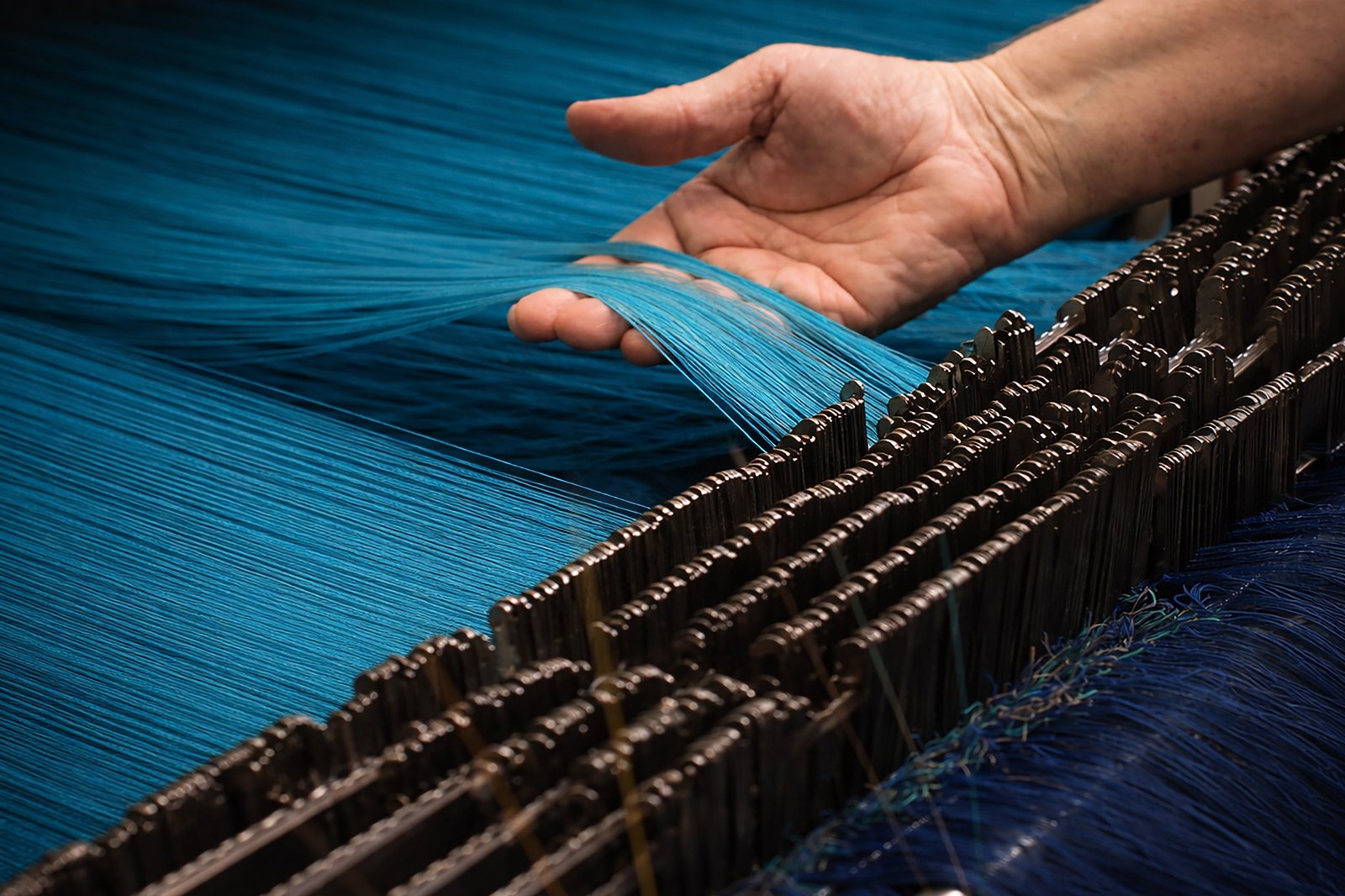
Simply put, thread count is the number of threads woven into one square inch of fabric. It includes both lengthwise threads (warp) and crosswise threads (weft).
So, if a fabric has 100 warp threads and 100 weft threads per inch, the total thread count will be 200.
That sounds simple. And it is. But only up to this point. Because in shirting, this number is frequently misunderstood or presented in a manner that does not reflect true quality.
The Common Misconception
Many people believe that a higher thread count automatically means a softer, finer, or more luxurious shirt.
That idea has been borrowed from bedsheets, where thread count is heavily marketed. Even there, it is often stretched beyond what is meaningful.
In shirting, the situation is even more complex.
Some manufacturers inflate thread count by counting each ply within a yarn as a separate thread. For example, a two-ply yarn may be counted twice, which makes the number look higher without actually improving the fabric.
This is why two fabrics with the same stated thread count can feel completely different in hand.
What You Should Be Looking At Instead
If thread count is not the full picture, what is?
The real character of a shirt fabric comes from a combination of factors. Each one plays a distinct role.
1. Yarn Count
Yarn count refers to the fineness of the yarn used to weave the fabric. In cotton shirting, finer yarns are indicated by higher numbers. For example, 80s, 100s, or 120s yarns are finer than 40s yarns. Finer yarns create lighter, smoother and more refined fabrics. They also require better raw material and more precise manufacturing. When someone talks about a “100s shirt”, they are referring to yarn count, not thread count. This is a far more meaningful indicator of quality.
2. FibreQuality
Not all cotton is the same. The length and strength of cotton fibres have a direct impact on the yarn. Longer fibres produce smoother and stronger yarns, resulting in better fabric. Shorter fibres can cause roughness, pilling and reduced durability. This is not visible on a label, but you can feel it when you touch the fabric.
3. Spinning Method
How the yarn is made also matters. Ring-spun yarns are commonly used in premium shirting because they are smoother and more uniform. Combed yarns go a step further by removing shorter fibres, which improves strength and finish. These processes require time, precision and experience, but they make a noticeable difference in the final fabric.
4. Weave Structure
The way threads are interlaced determines how a fabric behaves. A plain weave provides a clean, crisp feel and is commonly used in formal shirts. Oxford weaves provide a slightly textured appearance with a softer drape. Twill weaves, with their diagonal pattern, are generally smoother and more fluid. Even with the same yarn, different weaves can produce dramatically different results.
5. Finishing
The final processes applied to the fabric shape its performance and feel. Finishing can enhance softness, improve wrinkle resistance, or add subtle lustre. It is the stage where the fabric is refined and prepared for real-world use. A well-finished fabric feels balanced. It is comfortable, durable and consistent.
So, Does Thread Count Matter at All?
It does, but only within context. Thread count can give a general sense of fabric density, but it should never be used in isolation to judge quality. A fabric made with fine yarns, high-quality cotton and expert weaving can outperform a higher thread count fabric that lacks these fundamentals.
In other words, it is not about how many threads you have. It is about how those threads are made and brought together.
A Better Way to Choose Shirting Fabrics
Instead of focusing on a single number, take a more complete view.
Feel the fabric. Notice its smoothness and weight. Look at how it drapes. Pay attention to the weave and finish. Ask about the yarn count and the type of cotton used. When all these elements come together well, the result is a fabric that feels right from the first touch and performs well over time.
The Cirocco Perspective
At Cirocco Fabrics, our approach has always been simple. We focus on the fundamentals. The right fibre. The right yarn. The right weave. The right finish. Thread count is part of the process, but it is never the headline.
With over nine decades in the industry, we understand that true quality is built step by step, not defined by a single number.
If you are looking to create shirting that stands out for the right reasons, we would be glad to work with you.
Get in touch with Cirocco Fabrics to explore thoughtfully engineered shirting fabrics that deliver both feel and performance.
FAQ
What is considered a good thread count for shirting fabric?
There is no single “ideal” number. For most shirts, a balanced thread count that supports breathability and durability works best. Extremely high numbers are not always practical for daily wear, as they can make the fabric delicate and less breathable.
Why do some shirts feel softer even with a lower thread count?
Softness is frequently derived from the finishing process and how the fabric is treated after weaving. Enzyme washing and special softening finishes can significantly improve hand feel, regardless of thread count.
Does thread count affect how long a shirt lasts?
Not directly. Durability is primarily determined by the strength of the yarn and the tightness with which the fabric is constructed. A well-made fabric with a moderate thread count will last longer than a poorly made one with a higher count.
Is thread count important for all types of shirts?
Its importance varies. For formal and fine shirting, construction and yarn quality are more important than the number itself. For casual or heavier shirts, factors such as weave and fabric weight have a greater impact on comfort and performance.