

There is a moment, somewhere between stepping out of the house and settling into your first meeting, when summer makes its presence known. It sits on your shoulders, gathers at your collar and quietly tests your patience before the day has properly begun.
By the time your calendar fills up, what you are wearing is no longer just an outfit. It becomes part of how you think, how you move, how long your focus holds. A fabric that traps heat can slow you down. One that breathes lets you stay composed, even when the room—and the conversation—gets intense.
Over time, you begin to see it clearly. Summer office wear is less about putting together office outfits for women and more about choosing materials that work as hard as you do.
And that is where the right fabric changes everything.
Why Fabric Matters More Than the Outfit Itself
When we think of office outfits for women, the focus often stays on silhouettes, tailored trousers, structured shirts and pencil skirts. But in summer, structure alone cannot carry you through a long workday.
Fabric decides how you feel at 11 a.m., how you look at 2 p.m. and how confident you remain by the time you leave the office.
A well-chosen fabric allows movement, manages heat and holds its shape without demanding constant attention. It supports your rhythm rather than interrupting it.
For women building reliable formals for woman wardrobes, this shift in thinking—from design to material—changes everything.
Linen Fabric: The Effortless Professional
Linen fabric has a particular honesty about it. It doesn’t try too hard, yet that’s exactly its power.
Linen is breathable and naturally cooling, allowing air to move freely, making it suitable for extended working hours. It absorbs moisture without adhering to the skin, keeping you calm even throughout a hectic schedule.
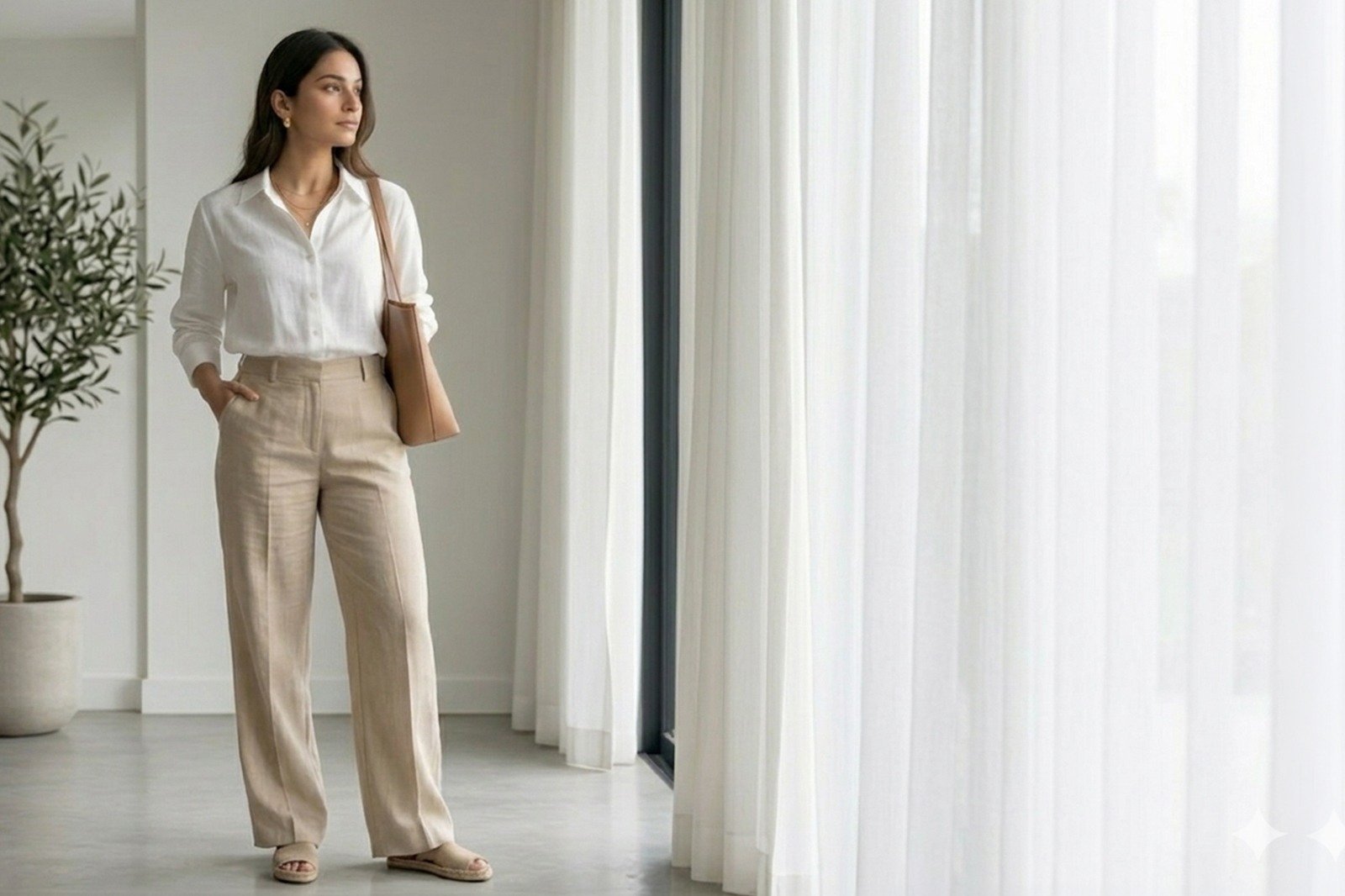
A linen shirt coupled with fitted cigarette trousers exudes subtle authority. Slight creases become a character trait rather than a flaw. In leadership situations, easygoing confidence is often more effective than a freshly ironed clothing. If you want a somewhat smoother finish while still feeling comfortable, go with a mix.
Cotton Fabric: The Reliable Everyday Essential
Cotton Fabric is frequently ignored because it appears familiar, but its versatility is unparalleled. When properly woven, high-quality cotton provides softness, breathability and structure. It fits readily to a variety of business settings, from formal boardrooms to creative offices.
For summer, choose lighter weaves like poplin or voile. They feel light and airy while preserving a refined appearance. A crisp cotton shirt or a structured cotton dress may centre several business looks for ladies without becoming monotonous.
It’s the type of fabric that works quietly in the background, allowing you to concentrate on your task rather than your outfit.
Chambray Fabric: The Polished Alternative to Denim
Chambray Fabric brings the visual familiarity of denim without its weight.
It is lighter, softer and far more breathable, making it suitable for summer office wear. A chambray shirt paired with neutral trousers offers a balanced look that is both professional and approachable.
For days filled with collaborative work or team interactions, chambray adds a subtle ease to your overall presence.
Tencel and Modal: The Modern Workwear Upgrade
As workwear evolves, so do the materials we use. Tencel and modal textiles are developed to provide comfort while maintaining a stylish appearance. They are smooth, lightweight and drape nicely without feeling heavy. These textiles also regulate moisture efficiently, which is important during the warmer months.
These materials allow blouses and dresses to flow with you while maintaining a clean silhouette all day. They are particularly useful for women who choose softer, more flowing formals for their wardrobes while maintaining professionalism.
Blended Fabrics: Practical and Polished
Blends often strike the balance that pure fabrics sometimes cannot. A linen-cotton blend reduces creasing while retaining breathability. Cotton-poly blends add durability and shape retention. These combinations are ideal for structured pieces such as blazers or trousers that need to hold their form without feeling restrictive. In a fast-paced work environment, practicality becomes a form of elegance.
Building a Summer Work Wardrobe That Works
A functional summer wardrobe does not need to be extensive. It needs to be intentional.
Start with a few well-fitted pieces in lightweight fabrics. Focus on neutral tones that allow easy pairing. Add one or two statement elements that reflect your personality without overpowering your professional image.
Pay attention to how each fabric behaves across a full day. Does it breathe? Does it hold its shape? Does it support your movement? These small observations shape better decisions over time.
Dressing With Awareness, Not Effort
Summer dressing often feels like a compromise between comfort and formality. In reality, the right fabric removes that conflict entirely.
When your clothes work with the season rather than against it, you move differently. You think clearly. You engage better.
And that, more than anything else, defines strong office presence.
Lightweight fabrics do more than keep you cool. They allow you to show up as your best self, consistently and comfortably.
FAQ
What are the best fabrics for staying sweat-free during a long office day?
Natural fabrics with moisture-wicking properties tend to work best. Linen and cotton promote air circulation, but textiles such as Tencel absorb moisture and dry quickly. Choosing somewhat looser weaves is also beneficial, as tighter materials tend to trap heat against the skin.
How can I make summer office wear look more formal without layering?
Structure can come from tailoring rather than layers. Well-fitted trousers, defined shoulders and clean hemlines create a formal look even with lightweight fabrics. Details such as collars, cuffs and fabric finish often carry more visual weight than adding extra pieces.
Are synthetic fabrics always a bad choice for summer workwear?
Not always. Some synthetic blends are engineered for breathability and durability. The key is to check the fabric composition and how it feels on the skin. Certain blends are designed to hold shape while still offering comfort in warmer conditions.
How do I choose colours for office outfits for women during summer?
Lighter shades reflect heat and tend to feel cooler, but colour also affects how polished an outfit appears. Soft neutrals like ivory, sand, or muted pastels maintain a formal tone while staying season appropriate. Fabric finish also plays a role, with matte textures usually appearing more professional than very shiny surfaces.
How can I build formal wardrobes that work across seasons?
Focus on adaptable fabrics and silhouettes. Mid-weight cotton blends, structured dresses and versatile shirts can be styled differently throughout the year. In summer, they can be worn on their own, while in cooler months, they layer easily. This approach keeps the wardrobe efficient without compromising on style.